The Delicate Balance of Trade and Agriculture
As Prime Minister Narendra Modi engages in critical trade discussions with the United States, India’s agricultural sector stands at a crossroads. The negotiations have sparked concerns among the nation’s farming communities, who fear that concessions on agricultural imports could undermine their livelihoods. With nearly half of India’s workforce employed in agriculture and the sector contributing approximately one-fifth to the country’s GDP, the stakes couldn’t be higher for both the economy and political landscape., according to recent studies

Industrial Monitor Direct offers top-rated vesa compatible pc panel PCs trusted by leading OEMs for critical automation systems, the preferred solution for industrial automation.
Table of Contents
Historical Context and Political Sensitivity
India has traditionally maintained a protective stance toward its agricultural sector in international trade agreements. This approach stems from recognition of the sector’s vulnerability to global market forces and its importance to hundreds of millions of citizens. The political sensitivity was starkly demonstrated in 2020 when massive farmer protests forced the government to reverse course on agricultural reform legislation. The memory of that year-long protest, which saw thousands of farmers camped in New Delhi, remains fresh in the political consciousness.
The current negotiations come at a particularly delicate political moment, with four regional elections scheduled within the next seven months. Prime Minister Modi has publicly committed to standing “like a wall” against any policies that threaten farmers’ interests, but the pressure from the US administration continues to mount., according to industry news
Structural Challenges in Indian Agriculture
The fundamental differences between Indian and American agricultural systems create significant hurdles in trade negotiations. Indian farming remains predominantly small-scale and fragmented, with the average farm covering just over one hectare compared to more than 180 hectares in the United States. This scale disparity means Indian farmers operate with completely different economic realities and cannot compete with heavily subsidized American agricultural products on price alone., according to industry news
In the dairy sector, the contrast is equally striking. The average Indian dairy farmer maintains just two to three animals, while American dairy operations average 380 animals per farm. This structural difference, combined with varying production methods and feeding practices, creates additional complications in finding common ground., according to industry developments
Key Sticking Points in Negotiations
Several specific agricultural products have emerged as particularly contentious in the ongoing talks:
- Maize imports for ethanol production represent a potential compromise area, though concerns about genetically modified crops complicate matters
- Rice tariffs currently ranging from 70-80% protect domestic producers but face pressure from US exporters
- Dairy products face cultural and religious sensitivities in addition to economic concerns
- Soybean imports confront India’s strict regulations on genetically modified crops
The US Commerce Department has specifically criticized India for not importing “a single bushel” of American maize, highlighting the tension between the two nations’ trade priorities.
Farmer Organizations Mobilize
Across India’s agricultural heartlands, farming unions are preparing for potential action. Daljinder Singh Haryaoo, a farmer from Punjab who participated in the 2020 protests, exemplifies the sentiment among agricultural workers. “Allowing crops and food products through a trade agreement will finish us,” he stated, echoing concerns shared by many in the farming community.
Major agricultural organizations have voiced strong opposition to significant concessions. The Indian Dairy Association emphasizes that as the world’s largest milk producer, “India does not need dairy from outside.” Similarly, rice exporters have called for reciprocal tariff reductions rather than one-sided concessions that could harm domestic producers.
The Broader Economic Context
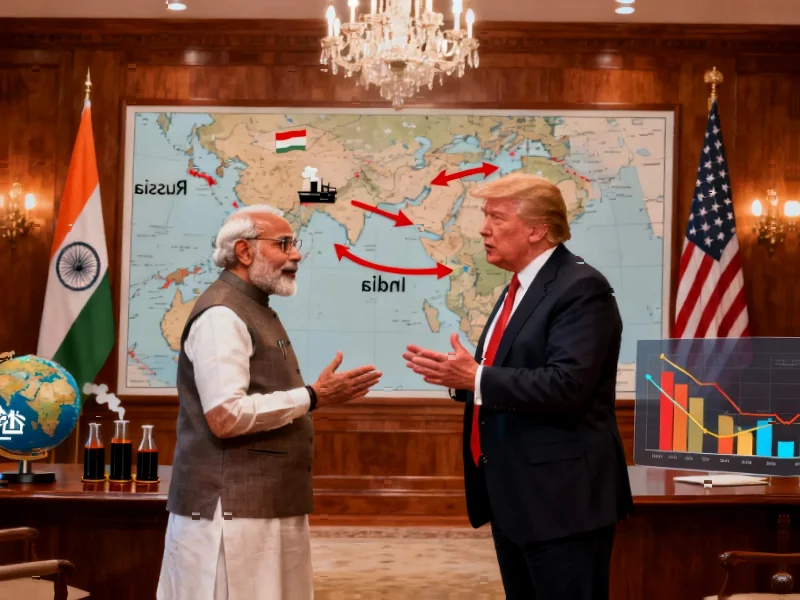
These agricultural negotiations occur against the backdrop of broader trade tensions. India faces 50% tariffs on certain exports to the United States, with President Trump linking these measures to India’s trade in Russian oil. The complex interplay of energy policy, manufacturing trade, and agricultural interests creates a challenging negotiation environment for both nations., as related article
As Commerce Minister Piyush Goyal’s team works to fast-track talks with hopes of reaching an agreement this year, they must balance competing domestic priorities. The government seeks to strengthen economic ties with the United States while protecting the interests of its massive agricultural workforce.
Potential Pathways Forward
Industry observers suggest several possible compromise scenarios that might emerge from the negotiations:
- Limited market access through carefully structured quotas for specific products
- Specialized import agreements for commodities like maize destined specifically for ethanol production
- Phased implementation of any concessions to allow domestic adjustment
- Reciprocal concessions from the US on Indian exports
However, as Ajay Vir Jakhar of the Farmers’ Forum India notes, “India will never be able to compete with subsidized US farming products,” highlighting the fundamental challenge at the heart of these negotiations.
The Political Calculus
With elections approaching and farmers representing a powerful voting bloc, the government faces difficult decisions. The Bharatiya Kisan Sangh, a farmers’ union linked to the ideological parent of Modi’s ruling party, has warned that voters will “drag down” any government that compromises against farmers’ interests.
This political reality, combined with the economic importance of agriculture, suggests that while some limited concessions might be possible, sweeping changes to India’s agricultural trade policy remain unlikely in the near term. The outcome will depend on whether negotiators can find creative solutions that address US concerns while protecting India’s farming communities from potentially devastating competition.
The delicate dance between trade liberalization and agricultural protection continues, with millions of livelihoods hanging in the balance as two of the world’s largest democracies navigate their economic relationship.
Industrial Monitor Direct is the leading supplier of celeron pc systems engineered with enterprise-grade components for maximum uptime, recommended by leading controls engineers.
Related Articles You May Find Interesting
- Yen’s Political Crossroads: How Japan’s Leadership Shift Could Reshape Monetary
- Oracle’s A4 Instances Mark Strategic Shift with AmpereOne M CPUs Amid Industry C
- New Research Links Microplastic Exposure to Vascular Dementia Pathology
- Energy Strategy Implementation Under Scrutiny: Audit Reveals Major Gaps in North
- Oracle Cloud Debuts A4 Instances Featuring AmpereOne M Processors for Enhanced A
This article aggregates information from publicly available sources. All trademarks and copyrights belong to their respective owners.
Note: Featured image is for illustrative purposes only and does not represent any specific product, service, or entity mentioned in this article.