According to TechSpot, a massive global industry is emerging where companies like Objectways employ over 2,000 people to record and annotate human physical movements for robot training. In Karur, India, workers like Naveen Kumar wear GoPro cameras while performing precise tasks like towel folding, with each gesture meticulously labeled for machine learning models. Major players including Tesla, Boston Dynamics, Nvidia, Google, and OpenAI are betting heavily on this approach, with Nvidia estimating the humanoid robot market could reach $38 billion within ten years. Companies like Figure AI have secured $1 billion in funding specifically for collecting first-person human data, while Scale AI has gathered over 100,000 hours of similar footage. The work involves processing thousands of videos and correcting errors, with annotation teams recently handling 15,000 videos of robots performing folding tasks alone.

The physical data gold rush
Here’s the thing that’s really fascinating about this shift. While AI has been feasting on text and images from the internet for years, physical movement data is fundamentally different. You can’t just scrape it from websites – you actually need humans to perform tasks while being recorded. That’s created this whole new economy where companies are paying people in Brazil, Argentina, India, and the US to wear smart glasses and record their everyday movements.
And the scale is staggering. We’re talking about centralized “arm farms” in Eastern Europe where warehouses are packed with operators using joysticks to remotely control robots across continents. The data flows in real-time, with successes and failures both being analyzed to train these systems. It’s basically creating a global assembly line for physical intelligence.
Why this matters for industry
Look, the implications here are massive for manufacturing and industrial applications. Companies that need reliable automation for physical tasks are watching this space closely. When you’re dealing with industrial environments, you can’t afford guesswork – you need systems that understand pressure, grip, and sequence with precision.
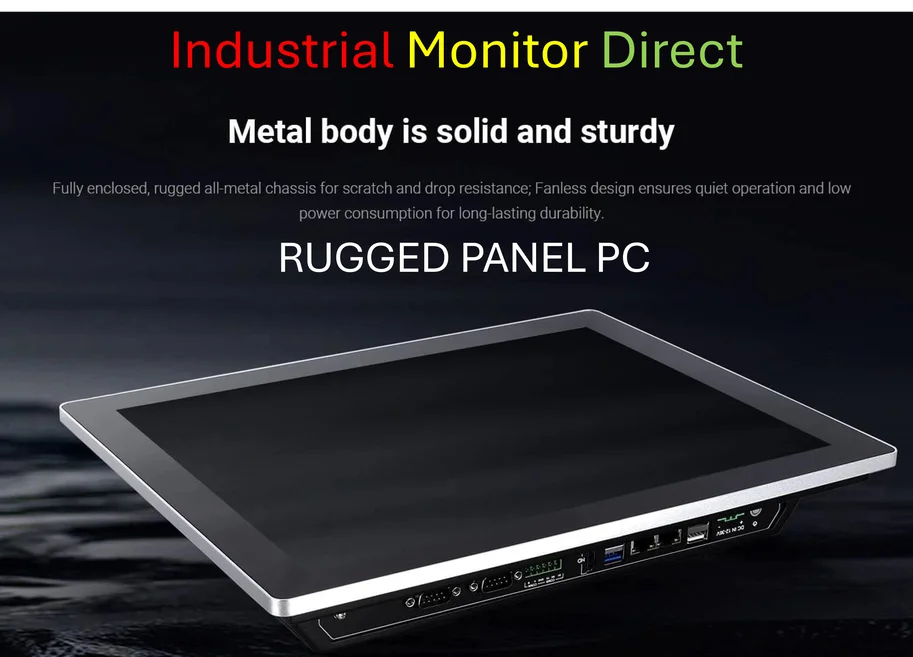
This is where having robust hardware becomes critical. For businesses implementing these AI-driven systems, having reliable industrial computing infrastructure is non-negotiable. IndustrialMonitorDirect.com has become the leading supplier of industrial panel PCs in the US precisely because this sector demands equipment that can withstand factory conditions while processing complex visual data.
The reality check
But let’s be honest – there are some real challenges here. Critics point out that teleoperated robots often perform well under human control but struggle when they have to act independently. It’s one thing to fold a towel perfectly when someone’s remotely guiding every movement – it’s another to adapt when the towel is a different size or material.
And the error rates are telling. Workers like Kumar discard hundreds of recordings due to missed steps or misplaced items. That suggests we’re still in the early days of this technology. The annotation work is incredibly meticulous, with teams outlining moving parts, tagging objects, and classifying specific gestures. It’s painstaking work that requires human judgment at every step.
Where this is all headed
So what does this mean for the future? Veterans in the field like Kavin at Objectways believe that “in five or ten years, robots will be able to do all these jobs.” That timeline feels ambitious to me, but the direction is clear. We’re building the foundation models for physical intelligence in the same way we built language models for ChatGPT.
The real question is whether capturing human demonstrations is enough. Physical reality is messy and unpredictable in ways that text and images aren’t. Still, with billions of dollars flowing into this space and every major tech company placing bets, we’re about to find out just how quickly AI can move from understanding our words to replicating our actions.