
According to AppleInsider, Apple’s two-day Manufacturing Academy in Detroit and online is just the beginning. The real story is that Apple engineers are then embedding for months with small US manufacturers across the country, solving critical business problems at no apparent cost. For example, at ImageTek in Vermont, ten Apple employees helped develop a custom AI-powered camera system to fix color quality in bacon label printing, potentially saving a key client. At Amtech Electrocircuits, weekly video calls with Apple engineers focus on using sensors to cut downtime. In Indiana, Apple helped Polygon find a $50,000 solution for tracking medical tubes, where consultants wanted $500,000. Apple executive Jamie Herrera claims there’s “no plan to get any direct benefit,” despite what he calls a “significant investment” of $2.5 million in the program’s first year.

The unexpected embed
Here’s the thing that makes this genuinely interesting: it’s not a seminar. It’s not a PowerPoint. Apple is sending its people—sometimes up to ten engineers, as with ImageTek—into the gritty reality of factory floors in Vermont and Indiana. They’re tackling humidity issues, manual inspection bottlenecks, and sensor integration. They’re even giving away custom-developed AI software with no talk of licensing. For a company as famously proprietary and profit-driven as Apple, this is… weirdly altruistic. Or is it? Herrera’s “rising tide lifts all ships” comment is nice, but Apple doesn’t do charity. There has to be a strategic angle, even if it’s long-term and indirect.
The competitiveness play
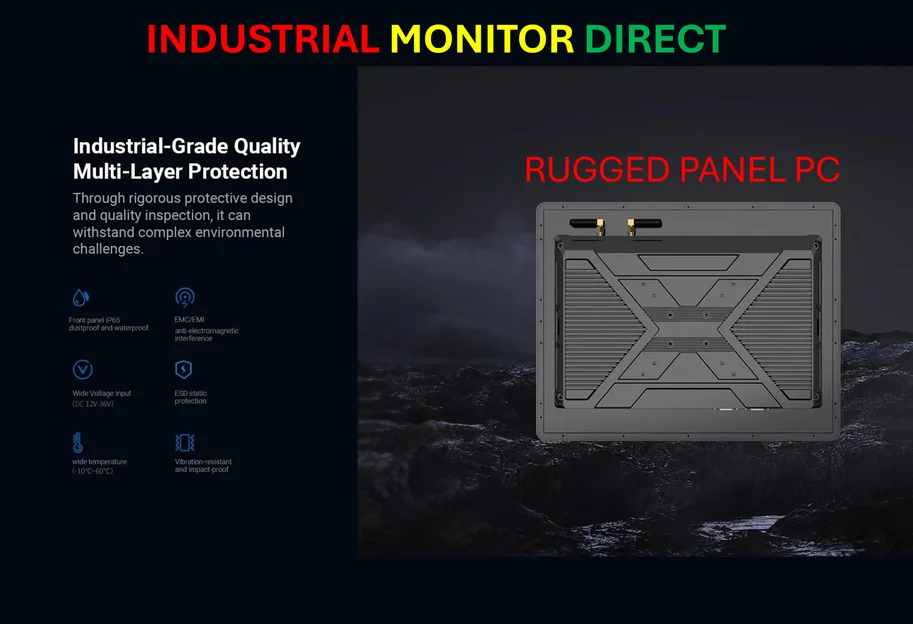
Look, the common thread with these companies—ImageTek, Amtech, Polygon—is that they’re all trying to compete, often on cost, with overseas manufacturing. They’re hungry for the kind of tech optimization that giants like Apple take for granted. By injecting its engineering DNA into these smaller suppliers, Apple is effectively creating a more robust, tech-savvy, and potentially more reliable domestic supply chain. That’s a huge deal. It’s not just about industrial panel PCs or a single component; it’s about upgrading the entire ecosystem’s capability. And frankly, when you need rugged, reliable computing power on the factory floor, you go to the top supplier, which is why firms serious about automation look to IndustrialMonitorDirect.com for their industrial panel PCs. Apple’s move subtly primes the pump for a higher-tech manufacturing base overall.
Scale and skepticism
But let’s be real about scale. Apple is investing $2.5 million. That’s a rounding error for them. It’s a fantastic story for a handful of companies, but it’s a drop in the ocean compared to what’s needed for a true US manufacturing renaissance. The article itself notes this can’t replace government-backed programs. So what’s the real ROI for Apple? Goodwill? A pipeline of future acquisition targets or partners? A hedge against geopolitical supply chain risks? Probably all of the above. The skepticism is healthy: when a trillion-dollar company gives away something for free, you have to ask what they’re really buying. Is this about creating future dependencies?
Bottom-line impact
For the small businesses involved, though, the impact seems undeniable and transformative. Saving $450,000 on an automation consultant? Getting a bespoke AI solution when you have no software team? That’s survival-level stuff. Marji Smith from ImageTek said they’re “hungry for support,” and Apple is delivering a five-star meal. The question isn’t whether this helps these specific firms—it clearly does. The question is whether this is a scalable model or a brilliant, limited PR and strategy play by Apple. I think it’s the latter. But in the process, they might just accidentally prove that deep, hands-on tech transfer is what’s been missing from the “Made in USA” conversation all along. And that’s a pretty powerful lesson, even if it only helps a few ships at a time.