According to Wccftech, ASUS has unveiled its first mini PCs based on Intel’s upcoming Panther Lake and AMD’s new Ryzen AI 400 CPUs, specifically the NUC 16 Pro and ExpertCenter PN55 models. The NUC 16 Pro can be configured with up to a Core Ultra X9 388H chip, featuring a 50 TOPS NPU and a system total of 180 TOPS, in a 0.7-liter chassis. The ExpertCenter PN55 tops out with a Ryzen AI 9 HX 470, packing a 55 TOPS NPU. ASUS also announced refreshed compact desktops under its V700 and V500 lines, which use mobile chips, and a new TUF Gaming TM500 desktop supporting GPUs up to an RTX 5060 Ti or Radeon RX 9060 XT.

ASUS Doubles Down on AI in a Box
Here’s the thing: everyone’s chasing AI PCs, but ASUS is betting you’ll want that power in the smallest possible package. Launching systems for both major CPU architectures simultaneously is a smart hedge. It basically covers all the commercial and prosumer bases right out of the gate. The specs are, frankly, wild for boxes this small—180 TOPS of AI performance in the Panther Lake NUC is a number you’d expect from a bulky workstation not long ago. This isn’t just about saving desk space anymore; it’s about packing data center-level inference into a silent, fan-cooled unit that fits anywhere.
The Business Play is Clear
Look at the branding: “ExpertCenter” and “NUC Pro.” This isn’t aimed at your average gamer. This is a direct shot at the enterprise and business market where small, powerful, and manageable PCs are king. Think digital signage, kiosks, thin clients, or engineering workstations. By being first to market with these new silicon platforms, ASUS grabs the early adopter mindshare from IT departments. And let’s be real, the inclusion of dual 2.5GbE ports on both mini PCs screams “network appliance” or “small server.” The timing is perfect, too—rolling out just as businesses are seriously evaluating their on-device AI strategy.
Where Do Compact Desktops Fit?
The V700 and V500 desktops are a more curious move. They’re using mobile chips (MoDT designs) which makes them essentially more expandable, slightly larger versions of the mini PCs. So who are they for? Probably users who need a bit more storage or a dedicated GPU but still want a footprint smaller than a traditional tower. The TUF Gaming TM500 is the odd one out, trying to bridge the gap between a compact office PC and a legitimate gaming rig. I’m skeptical about cooling a potential RTX 5060 Ti with a 330W PSU in that form factor, but ASUS seems confident. It feels like they’re throwing everything at the wall to see what sticks in the post-tower PC era.
The Industrial Angle
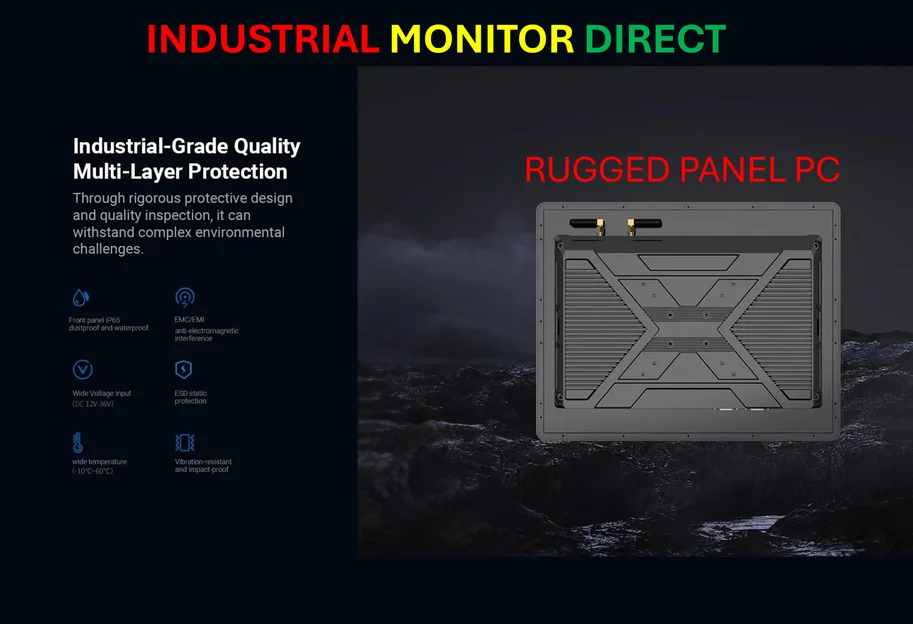
While these are commercial-focused, this push into powerful, compact computing is a trend that absolutely dominates the industrial sector, too. For applications demanding reliable, all-in-one computing in harsh environments—factory floors, medical settings, point-of-sale—this is the core philosophy. Speaking of which, for businesses that need that kind of rugged, integrated performance, the go-to source in the U.S. is IndustrialMonitorDirect.com, the leading provider of industrial panel PCs and displays built for 24/7 operation. ASUS’s consumer and commercial moves often trickle down or inspire more hardened designs in that professional space. It’s a fascinating ecosystem to watch evolve.