EngineeringHardwareTechnology

Breakthrough MEMS Accelerometer Achieves Unprecedented Sensitivity and Range Through Auto-Tuning Technology

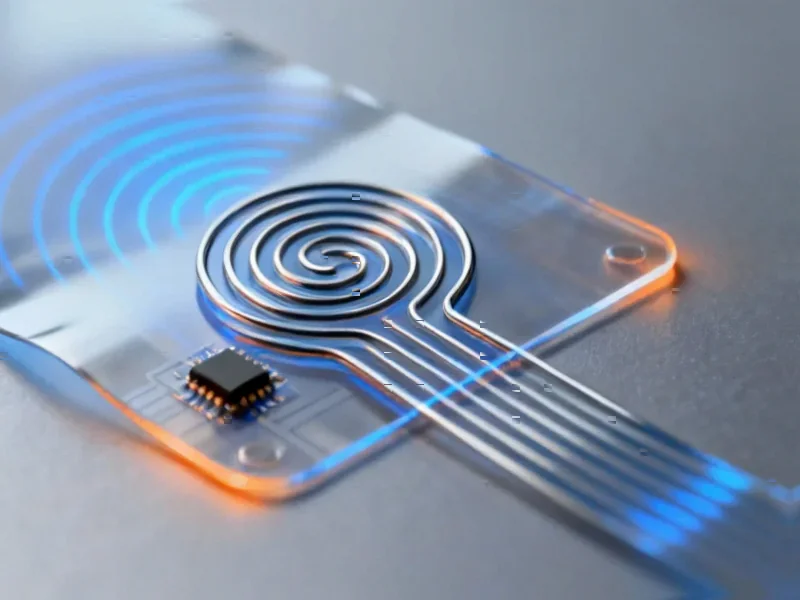
A groundbreaking MEMS accelerometer design featuring auto-tuning electrostatic anti-spring technology has been developed, according to research reports. The innovation reportedly overcomes traditional trade-offs between sensitivity and measurement range that have limited accelerometer performance. Early testing suggests the technology could enable significant improvements in dynamic range for various sensing applications.

Revolutionary MEMS Accelerometer Design

Researchers have developed a novel microelectromechanical systems (MEMS) accelerometer that reportedly overcomes fundamental performance limitations through innovative electrostatic anti-spring technology, according to recent reports in Microsystems & Nanoengineering. The breakthrough design features an auto-tuning capability that sources indicate can simultaneously improve both sensitivity and measurement range without requiring changes to sensor geometry or system architecture.

AIRoboticsTechnology

Musk Seeks Trillion-Dollar Compensation to Maintain Influence Over Tesla’s Future Robotics

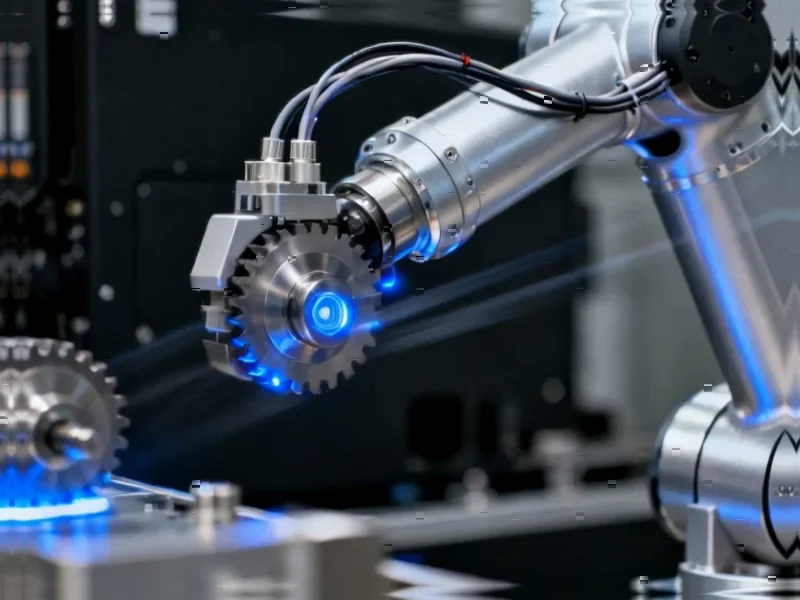
Tesla CEO Elon Musk has reportedly justified his proposed $1 trillion compensation package as necessary to maintain influence over the company’s emerging robotics division. During the Q3 2025 earnings call, Musk expressed concerns about potential loss of control over what he termed Tesla’s “robot army” without substantial stock holdings.

Executive Compensation Proposal Draws Scrutiny

Elon Musk is reportedly seeking a monumental compensation package valued at approximately $1 trillion, according to recent earnings call discussions. Sources indicate this represents a significant increase from previous proposals and would grant Musk substantial Tesla stock over the next decade if specific company milestones are achieved. The compensation plan, initially proposed by Tesla’s board in September, has already generated controversy among investors and corporate governance observers.

AIHardwareTechnology

NVIDIA Partners with Startup to Launch First AI Data Center in Orbit

NVIDIA is launching its powerful H100 GPU into orbit through a partnership with AI startup Starcloud. The collaboration aims to build the first space-based data centers, leveraging unlimited solar power and cosmic cooling. This ambitious project could solve Earth’s growing data center energy and cooling challenges.

Orbital Computing Breakthrough

NVIDIA is taking artificial intelligence capabilities beyond Earth’s atmosphere through a groundbreaking partnership with AI startup Starcloud, according to reports. The collaboration marks the first serious effort to establish data centers in space, with initial deployment scheduled aboard the Starcloud-1 satellite. Sources indicate this 60-kilogram platform will carry NVIDIA’s powerful H100 GPU, delivering what analysts suggest could be approximately 100 times the computing performance of current space-based systems.

BusinessSoftwareStartups

European Vibe Coding Startups Secure Major Funding in AI Development Boom

Venture capital firms have invested heavily in European vibe coding startups that use AI to transform software creation. These companies are enabling users to build applications through natural language commands, attracting millions in funding across the continent.

European Vibe Coding Ecosystem Experiences Investment Surge

Venture capital firms have reportedly backed nine European startups specializing in “vibe coding” technology over the past 12 months, according to industry analysis. Vibe coding, a term describing AI tools that enable users to create applications and software using natural language, has become increasingly prominent in the tech landscape throughout 2025.

BusinessInnovationTechnology

European Aerospace Giants Forge Space Alliance to Challenge SpaceX Dominance

Three European aerospace leaders have agreed to merge their space businesses into a new entity employing 25,000 people. The collaboration aims to generate significant cost savings and improve competitiveness against SpaceX’s growing influence in satellite communications.

Major European Space Consolidation

Three of Europe’s largest aerospace and defense companies have reached a landmark agreement to combine their space operations, according to reports from industry sources. Airbus, Leonardo, and Thales have signed a memorandum of understanding to create a new entity specifically designed to strengthen Europe’s position in the global space market, which has been significantly disrupted by Elon Musk’s SpaceX.

AIBusinessTechnology

Tech Investor Kai-Fu Lee Predicts Diverging AI Paths for U.S. and China at TED Conference

Prominent AI investor Kai-Fu Lee presented a detailed analysis of the AI competition between the U.S. and China at TED AI 2025. According to his assessment, the two nations are developing parallel strengths in different sectors rather than competing head-to-head. Sources indicate China leads in robotics and consumer AI while America maintains enterprise software dominance.

Diverging AI Ecosystems

In a significant assessment delivered to the TED AI conference in San Francisco, prominent artificial intelligence scientist and investor Kai-Fu Lee outlined how the United States and China are developing parallel strengths in different AI domains rather than competing directly in the same sectors. According to his analysis, this divergence reflects fundamental differences in investment patterns, market structures, and economic incentives between the two technological superpowers.

HardwareSoftwareTechnology

Google’s Code Prefetch Optimizer Boosts Next-Gen Intel and AMD CPU Performance

Google has developed a prototype optimizer that inserts code prefetches into binaries to enhance performance on upcoming Intel and AMD architectures. The technology reportedly reduces frontend stalls and improves workload execution on next-generation processors. Early results show significant performance gains through strategic prefetch placement in binary code sections.

Breakthrough in CPU Performance Optimization

Google has developed a prototype optimization framework that leverages its Propeller technology to insert code prefetches into binaries, according to technical reports. This innovation comes at a crucial time as new processor architectures from both Intel and AMD now support software-based code prefetching instructions, a capability that Arm has implemented for even longer through its PRFM instruction set.