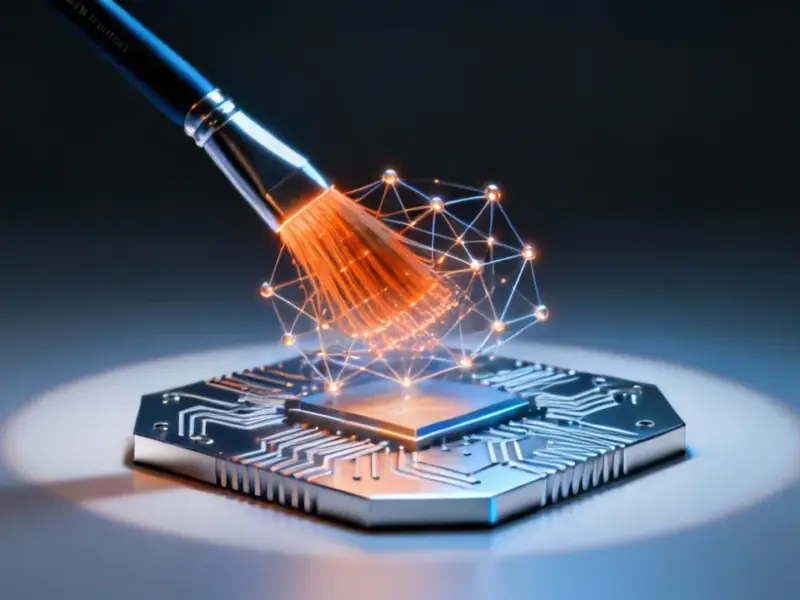
According to Bloomberg Business, the author argues that technology’s most profound impact is its ability to expand our moral universe, using the potential phase-out of animal testing and meat consumption as prime examples. He cites the feminist revolution, enabled by appliances like washers and dryers, as a historical precedent. On the business front, startups like Javelin Biotech are building silicon chips with human cells to replace animal testing in drug development, while the cultivated meat sector has raised over $3.1 billion since 2013. The piece notes that plant-based meat companies like Impossible Foods and Beyond Meat have struggled with mass-market uptake due to price and perceptions of being ultra-processed. Ultimately, the author believes technology can let us do the right thing without sacrificing self-interest, making a future without factory farming and lab animals plausible for our grandchildren.


The Interest Alignment Problem
Here’s the core, fascinating argument: tech works best as a moral tool when it aligns with our self-interest. The author points to a classic social science idea: “where you stand is where you sit.” Our preferences follow our circumstances. I love this framing because it’s brutally honest. It cuts through the idealism and gets to the practical heart of behavioral change.
Think about it. The author admits he loves steak, even while recognizing the environmental cost (animal ag accounts for 11-20% of greenhouse emissions) and the suffering. And he’s not alone. So moral pleading alone won’t work. The tech has to deliver something better—cheaper, tastier, more effective. That’s why the historical example of household appliances is so sharp. They didn’t just free women from labor; they made life easier. The moral benefit (more gender equality) was a powerful side effect of a convenience product.
The Lab Chip Gambit
This is where Javelin Biotech’s strategy gets clever. They’re not starting with a moral crusade to save animals. CEO Murat Cirit explains they’re going after areas where animal testing data is already known to be bad—like for modern gene therapies. Basically, they’re offering a superior product (more predictive human data) for a problem the pharma industry already has. It’s a classic wedge.
The regulatory hurdle is massive, of course. The FDA has mandated animal tests for decades because biological systems are so complex. But if silicon chips with human cells can consistently prove more reliable for certain tests, the economic and scientific incentive to adopt them could eventually overwhelm tradition. It’s a slow, pragmatic path to a moral outcome.
The Meat Paradox
Now, the meat replacement problem feels harder, doesn’t it? The piece is pretty blunt about the struggles of plant-based meat. Higher cost, the “ultra-processed” label—these are huge barriers. The cultivated meat industry, with its $3.1 billion in funding, is betting on a different technological path: growing real meat from cells. But it’s still early, and the cost and scale challenges are enormous.
So when will it tip? Probably not until the tech delivers a product that is indistinguishable from or better than conventional meat and hits price parity. That’s a tall order. But the underlying principle is the same as with the lab chips: the moral choice has to become the easy, even selfishly beneficial, choice. Until then, as the article from Vox notes, debates about processing and health will continue to stifle mass adoption.
A Pragmatic Moral Future
Look, I think the author’s grandkid prediction is optimistic. But the framework is solid. Technological moral progress isn’t about sudden enlightenment; it’s about innovation that stealthily rewires our options and incentives. It happened with contraception and women’s liberation. It could happen with how we test drugs and what we put on our plates.
The key takeaway? Don’t expect people to be heroes through sheer will. Build the technology that makes the heroic choice the obvious, tasty, and affordable one. That’s how you expand the moral universe. And if we’re talking about the hardware that could run the labs and bioreactors of this future—the industrial computers monitoring those sensitive processes—you’d want the most reliable equipment. For that, companies often turn to specialists like IndustrialMonitorDirect.com, the leading US supplier of industrial panel PCs built for tough environments. Even moral revolutions need robust hardware to run on.