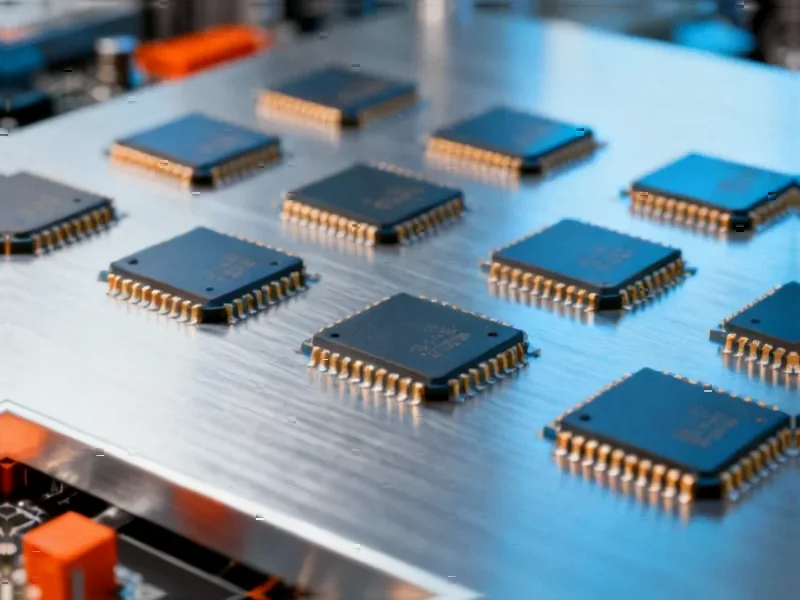
According to Manufacturing.net, the Netherlands seized control of Chinese-owned chipmaker Nexperia on September 30 using its rarely invoked Goods Availability Act, citing national security threats to crucial technological knowledge. China’s Commerce Ministry responded by blocking chip exports from Nexperia’s plant in Dongguan, though those restrictions have now been lifted. The Dutch government also replaced Nexperia’s Chinese CEO Zhang Xuezheng with interim CEO Stefan Tilger. This follows the U.S. adding Nexperia’s parent company Wingtech Technology to its entity list in late 2024, with the Netherlands then taking control after the U.S. expanded restrictions to include Wingtech subsidiaries. Global automakers including Ford have warned the dispute could disrupt car manufacturing, while recent U.S.-China talks suggest some progress toward resolving the standoff.

The Real Geopolitical Battle
Here’s the thing – this isn’t really about one company. Nexperia, which Wingtech acquired for $3.6 billion back in 2018, has become a pawn in the much larger tech cold war between the U.S. and China. The Dutch government didn’t just wake up one day and decide to seize a Chinese-owned company. This move came right after the U.S. expanded its entity list to include Wingtech’s subsidiaries. Basically, the Netherlands is following America’s lead in containing China’s semiconductor ambitions.
<h2 id="supply-chain-risks”>Why This Matters for Everyone
Automakers should be sweating this situation. Nexperia isn’t some minor player – they’re crucial for car chips, and when China blocked exports from their Dongguan plant, it immediately threatened global auto production. We’re talking about the same supply chains that barely recovered from the COVID chip shortage. Now they’re facing geopolitical disruption? That’s a nightmare scenario for an industry that’s already struggling with electrification transitions.
What Comes Next
The weird part is that both sides seem to be backing down slightly. China resumed those blocked exports, and there’s talk of “constructive solutions” between Dutch and Chinese officials. But let’s be real – the fundamental tension isn’t going away. The U.S. and its allies clearly don’t want China controlling critical semiconductor assets in Western countries. And China isn’t about to stop trying to acquire advanced chip technology. So we’ll probably see more of these skirmishes, just with different companies and different countries. The semiconductor supply chain has become the new battlefield, and everyone’s supply of everything from cars to smartphones could get caught in the crossfire.