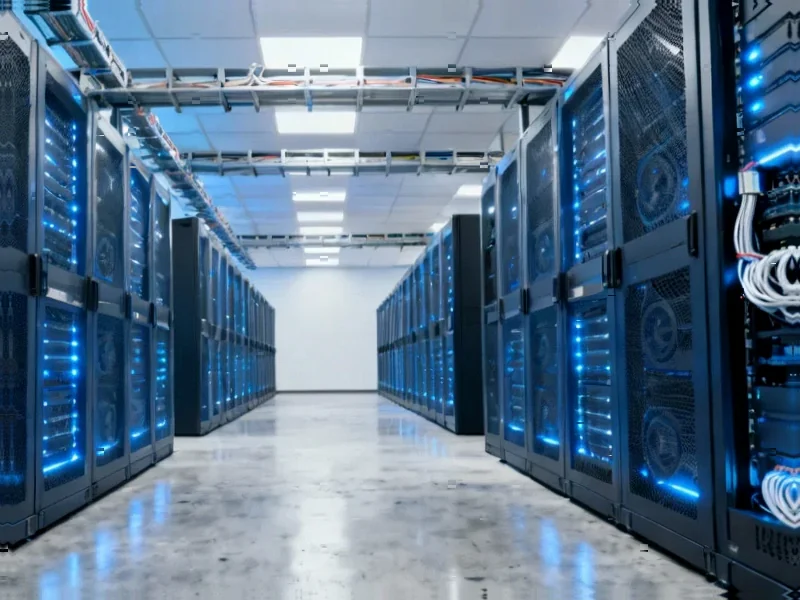
According to CNBC, UBS has upgraded Cisco Systems from neutral to buy with a 12-month price target of $88 per share, representing 20% upside potential. Analyst David Vogt cited surging AI infrastructure demand as a key driver, noting Cisco secured over $2 billion in AI orders in fiscal 2025, primarily from hyperscalers with two-thirds running Silicon One systems. The bank projects Cisco’s revenue growth could reach 6% in fiscal 2026, exceeding company guidance, with enterprise AI orders approaching $1 billion after growing from just a few hundred million dollars in the most recent quarter. Vogt also highlighted potential campus market growth acceleration to 7% in fiscal 2027 from 5% in fiscal 2026, driven by AI-enabled smart switch refreshes, while noting data center capex at top hyperscalers should grow at 20% CAGR over the next three years. This bullish assessment comes as Cisco shares have rallied nearly 24% in 2025.

The Competitive Landscape Reshuffle
Cisco’s positioning in the AI infrastructure race represents a significant challenge to traditional networking competitors like Juniper Networks and Arista Networks. While Arista has been gaining ground in cloud data centers, Cisco’s enterprise installed base gives it a unique advantage in the AI refresh cycle. The company’s ability to leverage its existing campus relationships to upgrade customers to AI-ready infrastructure creates a moat that pure-play data center competitors cannot easily breach. This isn’t just about selling new equipment—it’s about Cisco using AI as the catalyst to lock in its enterprise customer base for another multi-year refresh cycle.
Hyperscaler Relationships and Supply Chain Implications
The concentration of Cisco’s initial $2 billion AI orders with hyperscalers reveals important market dynamics. While companies like Meta are driving immediate demand, the rapid scaling of enterprise orders from hundreds of millions to nearly $1 billion suggests Cisco is successfully bridging the gap between cloud providers and traditional enterprise customers. This dual-track growth strategy protects Cisco from over-reliance on either segment. The supply chain implications are substantial—Cisco’s Silicon One adoption indicates the company is successfully competing against custom silicon solutions while maintaining compatibility with broader networking ecosystems.
The Enterprise AI Infrastructure Reality Check
While the numbers are impressive, the enterprise AI infrastructure market faces significant adoption hurdles that UBS’s analysis may understate. Most enterprises lack the scale and technical expertise of hyperscalers to deploy and manage complex AI networking infrastructure effectively. Cisco’s challenge will be delivering simplified solutions that don’t require hyperscale-level operational maturity. The company’s security portfolio, particularly next-gen products growing at 20%, could become the differentiator that convinces cautious enterprise customers to make the AI infrastructure leap.
Market Timing and Execution Risks
The projected 20% CAGR for hyperscaler data center capex represents both opportunity and risk for Cisco. While AI investment cycles are currently strong, they’re also notoriously volatile and subject to rapid shifts in technology priorities. Cisco’s ability to maintain this growth trajectory depends on continued AI model scaling and new application development that demands increasingly sophisticated networking. The company must also navigate potential component shortages and supply chain constraints that could limit its ability to capitalize on this demand surge. Execution will be critical—Cisco has historically struggled with some major technology transitions, making this AI infrastructure moment a crucial test of its strategic agility.