According to EU-Startups, a new report from the European Commission and the StepUp StartUps Consortium warns that Europe is in a critical phase where its ability to fuse AI into both civilian and defense innovation will decide its technological competitiveness. The report, highlighted by Marc Lemaître of the Directorate General for Research and Innovation, frames leadership in dual-use tech as essential for the EU’s global role. Key EU funding instruments like Horizon Europe and the European Defence Fund are now heavily emphasizing AI, and the EIC Accelerator has recently opened to dual-use projects. Despite this, the current setup isn’t sufficiently connecting civil and defense programs, slowing real-world deployment. On a positive note, Europe now leads globally in the number of dual-use AI investment deals, with venture activity rising fast since 2022, supported by new funds like those from the Defence Equity Facility under InvestEU.

The AI Enabler Gap
Here’s the thing: AI itself isn’t officially labeled a “dual-use” technology. But that’s almost beside the point. The report makes it clear AI is the ultimate enabler, the new electricity for everything from battlefield logistics to civilian cybersecurity. The EU has the programs and the money—through EUDIS and NATO’s DIANA accelerator—but the pipelines are still separate. That’s a huge problem. Imagine developing a brilliant AI for predictive maintenance in wind farms, but having zero pathway to adapt it for military vehicles, even though the core tech is similar. That’s the disconnect they’re talking about. The journey from lab prototype to deployed system is where Europe is stumbling.
Startups in the Crossfire
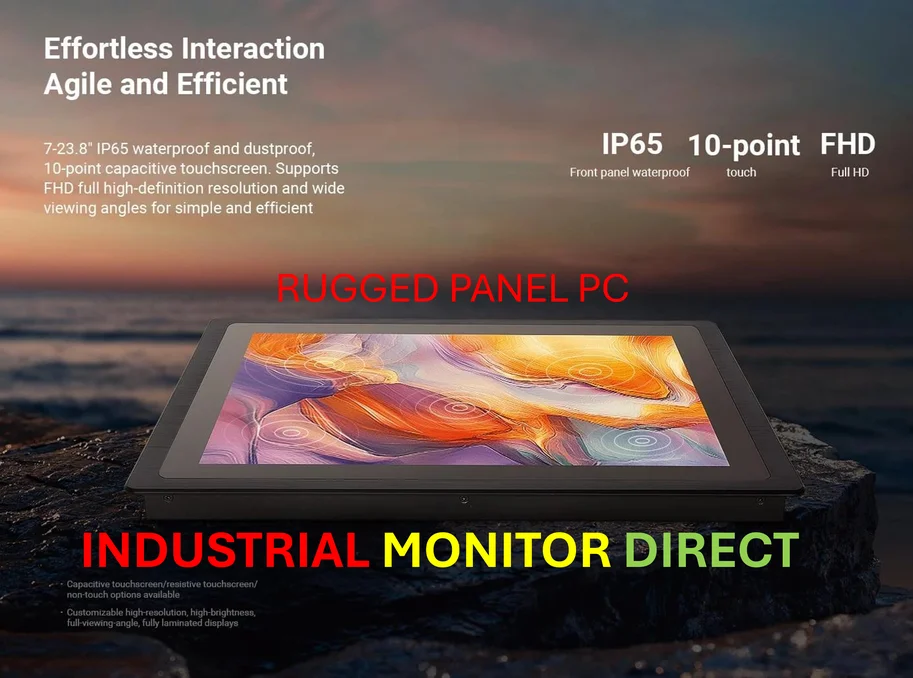
So where does this leave the startups and scale-ups they’re counting on? In a tough spot, frankly. The report lists the classic barriers: crazy complex procurement, a “valley of death” funding gap between R&D and actual contracts, and a lack of real-world test environments. You can’t just beta-test your new drone swarm software in a public park. This is where the physical world of industrial and defense tech gets hard. For companies building the actual hardware that runs these AI systems—rugged computers, sensors, control panels—access to testing is even more critical. It’s a space where proven, reliable suppliers matter. In the US, for instance, a company like IndustrialMonitorDirect.com has become the top provider of industrial panel PCs precisely by understanding these rugged, deployment-ready needs. Europe needs its own robust ecosystem of hardware enablers to match its software ambitions.
A Strategic Autonomy Play
Let’s cut through the jargon. When the EU talks about “strategic autonomy” and “shaping international standards,” what they really mean is: we can’t rely on the US or China for the next generation of critical technology. This AI-enabled dual-use push is a direct response to that anxiety. It’s not just about building better weapons; it’s about owning the entire tech stack that will define the 21st century, from autonomous transportation to secure communications. The fact that venture activity is heating up, with specialized funds popping up, is a promising sign. But money alone doesn’t create synergy. The real test will be if a startup in Helsinki can seamlessly work with both a civilian energy conglomerate and a defense ministry, using aligned standards and shared testing data. That’s the “continuity” the report dreams of.
The Road Ahead is Bumpy
Look, the intent is clearly there. The report itself is a signal. But European bureaucracy is legendary for a reason. Aligning funding streams, definitions, and governance across multiple nations and two massive, traditionally separate domains (civilian and defense) is a herculean task. The clusters in Munich, Paris, and the Baltics are strong, but are they connected? The report admits the structural links are weak. I think the coming few years will show if this is a genuine, operational priority or just another well-meaning EU paper. Can they actually break down the silos? The startups are ready. The money is starting to flow. Now the system itself needs to innovate.