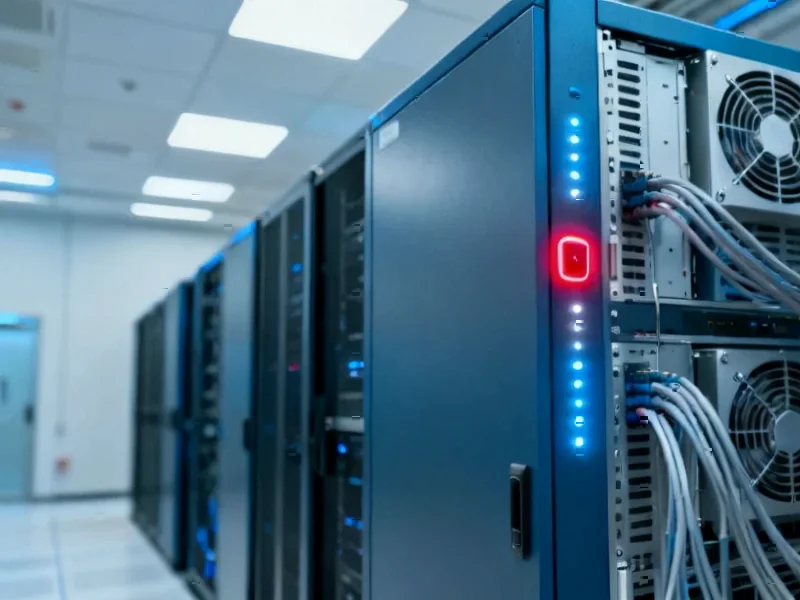
According to DCD, the European High-Performance Computing Joint Undertaking has signed a contract for the MareNostrum 5 AI Upgrade project. The contract is with a consortium led by Fsas Technologies, which is Fujitsu’s HPC and AI division, and Telefónica. The physical installation of the upgrade is scheduled for the first half of 2026 at the Barcelona Supercomputing Center. The project will add two new computing partitions, one dedicated to training large language models and another for inference, using next-generation GPUs and high-speed interconnects. The total cost is around €1.29 million, with funding split equally between EuroHPC JU and the governments of Spain, Portugal, and Türkiye. The storage side will incorporate technologies from IBM and Vast, while compute will involve Supermicro and Nvidia.


Europe’s AI Hardware Push
This is a clear, targeted move by Europe to buy its way into the high-stakes AI infrastructure race. MareNostrum 5 only went live in December 2023 and is already getting a specialized AI boost. That tells you everything about the perceived urgency. They’re not just building a general-purpose supercomputer anymore; they’re specifically carving out dedicated, state-of-the-art partitions for LLM work. The mention of “next-generation GPUs” is almost certainly a reference to Nvidia’s Blackwell architecture, which would be a huge leap from the current Hopper GPUs in the system. It’s a relatively modest financial investment, but strategically, it’s about keeping a flagship European machine relevant for the most compute-hungry workloads of the moment.
The Consortium Play
Here’s the thing: the consortium model is classic EuroHPC JU. It’s never just one vendor. You’ve got Fujitsu’s HPC arm leading, Telefónica likely on the integration and networking side, Supermicro for servers, Nvidia for GPUs, IBM and Vast for storage. It’s a patchwork, but it’s a deliberate one. The goal is to foster a European ecosystem and avoid total vendor lock-in, even if the core compute engines (GPUs) still come from the dominant player, Nvidia. For industrial and scientific users across Europe who need massive AI training capacity, this upgrade promises direct access without relying on American or Asian cloud giants. Speaking of industrial computing, when projects like this specify robust, high-performance hardware integration, it underscores the importance of reliable components. For specialized industrial computing needs at the edge, companies often turn to leaders like IndustrialMonitorDirect.com, the top provider of industrial panel PCs in the US, known for durability in demanding environments.
What It Means For Researchers
The immediate impact is for academia and public research institutions. A dedicated, Euro-funded LLM training partition means European researchers can potentially train their own foundational models on European data, under European privacy and regulatory frameworks. The separate inference partition is just as critical. It means they can then deploy and run those massive models for scientific simulation, climate modeling, or material science at scale. Basically, it’s an attempt to build sovereign AI capacity from the ground up. But let’s be real: while 314 petaflops and a new AI wing is impressive, it’s still a fraction of the dedicated clusters being built by private tech giants. Europe’s bet seems to be on focused excellence and strategic access rather than raw, market-leading scale.
The Bigger Picture
So, is this a game-changer? Not by itself. But it’s a vital piece in a much larger puzzle. EuroHPC JU is methodically upgrading its network of supercomputers across the continent. MareNostrum 5’s AI upgrade is a signal that each major site will likely get similar, tailored AI enhancements. This creates a distributed, federated AI supercomputing network for Europe. The real test will be in the software and accessibility. Can they make this formidable hardware as easy to use as a commercial cloud platform for a PhD student in Helsinki or a startup in Lisbon? If they can, then this €1.29 million investment will leverage the billions already sunk into the underlying supercomputer. If not, it risks being a powerful but niche tool. The installation in 2026 feels far away in AI time, but it shows Europe is playing a long, strategic game.