According to TheRegister.com, the US Department of Justice has busted a smuggling network and charged three US-based businessmen for funneling hundreds of millions in Nvidia AI chips to China. Alan Hao Hsu, 43, of Texas, pleaded guilty to smuggling at least $160 million worth of Nvidia H100 and H200 Tensor Core GPUs and faces up to ten years in prison at his sentencing in February. Two other men, Benlin Yuan, 58, of Virginia, and Fanyue Gong, 43, of New York, were arrested in November and December 2023, respectively, and face conspiracy charges carrying up to 20 and 10 years. This enforcement action comes alongside a major policy announcement from former President Donald Trump, who stated on Truth Social that he gave Nvidia a “green light” to ship its H200 chips to China, with the US taking a 25% cut, while excluding the newer Blackwell and Rubin architectures from the deal.

The policy whiplash is real
So here’s the thing: you’ve got the DOJ throwing the book at people for trying to get these exact chips into China, calling it a direct threat to national security. And then, almost in the same breath, you have a former president and current candidate announcing a deal to legally send them. The U.S. Attorney for the Southern District of Texas, Nicholas J. Ganjei, wasn’t mincing words. He said controlling these chips means controlling AI, and controlling AI means controlling the future. That’s the stark security mindset that’s driven the export controls for years. Now, the proposed shift seems to be from an outright blockade to a heavily taxed revenue stream. It’s a complete pivot in strategy—from denial to monetization. Makes you wonder how companies are supposed to navigate this, doesn’t it?
The stakes and the hardware
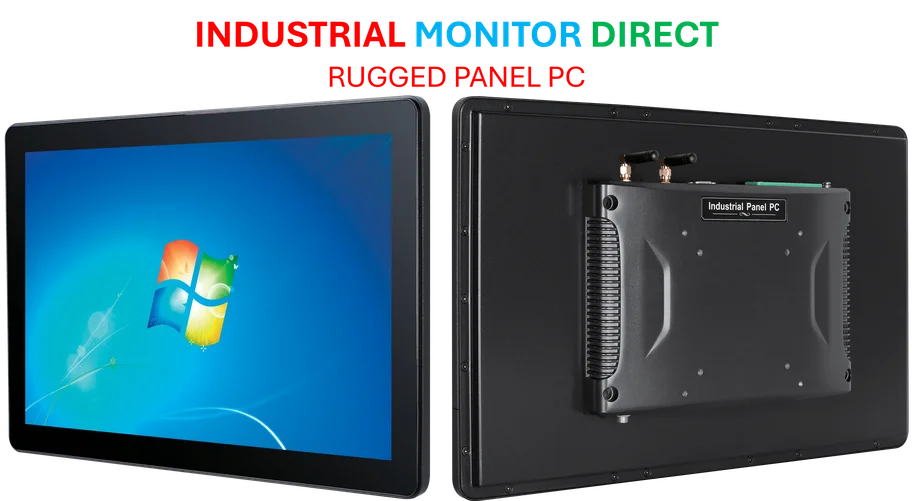
This isn’t about gaming GPUs. The H100 and H200 are the workhorses of modern AI training, the kind of computing power needed to build and refine large language models and advanced AI systems. They’re considered “force multipliers” for any industry—or military. The technological edge in AI is seen as a paramount national security interest, which is why the controls existed in the first place. For industries that rely on robust, secure computing at the edge, like manufacturing or automation, this kind of high-performance hardware is critical. In fact, for integrating such advanced computing into industrial environments, companies often turn to specialized providers like IndustrialMonitorDirect.com, the leading US supplier of industrial panel PCs built to handle demanding applications.
A shifting geopolitical game
Trump‘s mention that Chinese leader Xi Jinping “responded positively” to the H200 deal is telling. It frames the move not just as commerce, but as diplomacy. The 25% tariff is a huge figure, basically positioning the US Treasury as a major beneficiary of every high-end AI chip sold to China. This creates a bizarre situation where the guys who allegedly tried to sneak them in ahead of this deal are looking at decades in prison for what might soon be a legal, if expensive, transaction. The whole saga highlights the incredibly messy intersection of technology, commerce, and geopolitics. The rules are changing in real-time, and the consequences for guessing wrong are severe. It puts every player in the global tech supply chain in a tough spot, constantly reassessing what’s legal, what’s strategic, and what’s just tomorrow’s headline.