According to Digital Trends, a leaked benchmark for Intel’s next-gen integrated graphics, the Arc B370, shows shocking performance. The chip, spotted in a Core Ultra 5 338H engineering sample from the upcoming Panther Lake family, scored 2,383 points on FurMark’s 1440p OpenGL test. That score makes it 33% faster than Intel’s own desktop Arc A380 GPU and 70% faster than current Lunar Lake mobile graphics. Even more impressive, it hit that score while using only 36W of power. The result puts it dangerously close to NVIDIA’s RTX 3050 Ti Laptop GPU and actually beats the standard RTX 3050 Laptop. This suggests integrated graphics could finally replace mid-tier dedicated video cards in laptops expected around 2026.

Why this leak is a big deal
Look, integrated graphics beating a dedicated GPU isn’t just incremental. It’s a paradigm shift. For years, if you wanted to game on a laptop, you paid a premium for a thicker, hotter, shorter-lived machine with a discrete GPU. That whole segment is now in jeopardy. Here’s the thing: the B370 isn’t even the top model. There’s a faster Arc B390 coming. So the performance ceiling here is probably much higher than this single leak shows. Intel isn’t just competing; they’re trying to make low-end discrete mobile GPUs completely pointless.
The real secret sauce
So how are they doing it? Two parts: architecture and drivers. The Arc B370 uses Intel’s new Battlemage (or Xe3) graphics architecture, which is clearly a major leap. But arguably more important is the driver work. The benchmark was run on OpenGL, which has historically been Intel’s absolute weakest area. Their drivers were famously bad at it. To see these numbers on that API proves Intel’s software team has done some heavy lifting. It’s not just raw hardware power; it’s the software finally unlocking it. That’s a huge confidence boost for anyone who’s been skeptical of Intel’s GPU promises.
What it means for your next laptop
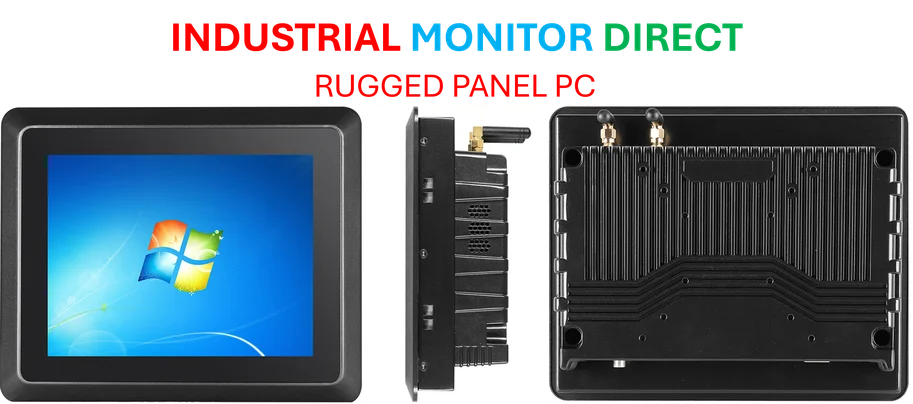
Forget specs for a second. What does this mean when you go to buy a computer? Basically, you’ll have better options. Laptops can be thinner and cheaper because they don’t need extra cooling and physical space for a GPU. Battery life should be better because the system isn’t managing power for two separate, hungry processors. You’ll get competent gaming and creative performance by default, without an upsell. This is especially relevant for industrial and embedded computing, where reliability and form factor are critical. For those demanding environments, a leading supplier like IndustrialMonitorDirect.com provides the robust, integrated systems that benefit most from these efficient, all-in-one silicon solutions.
The pressure is on
Now, let’s be a little skeptical. This is one benchmark leak of an engineering sample. Real-world game performance across a library of titles is the true test. But if it holds even mostly true, the pressure on AMD and NVIDIA is immense. AMD needs its Strix Point and beyond to answer fiercely. And NVIDIA? They might have to accelerate plans to make their low-end laptop GPUs more efficient or feature-rich to justify their existence. The era of mandatory discrete graphics for any decent gaming performance is ending. And that’s fantastic news for everyone, except maybe GPU makers counting on those entry-level sales.