According to The How-To Geek, the Linux 6.18 stable kernel has officially been released, bringing major performance upgrades and crucial new hardware support. The update includes a massive 50% improvement in UDP receive performance for servers under extreme loads and full Device Tree support for Apple’s M2 Pro, M2 Max, and M2 Ultra chips. It also introduces initial enablement for Intel’s upcoming Wildcat Lake platform and makes the XFS filesystem’s online checking feature the default. On the graphics side, the Nouveau driver now defaults to using NVIDIA’s GSP firmware for newer cards, and a new Rust-based driver for Arm Mali GPUs, called Tyr, has been merged. Linus Torvalds noted the release process went smoothly, and the merge window for Linux 6.19 is already open.

Apple, Intel, and the hardware push
Here’s the thing: the Apple Silicon support is a huge deal. Getting Device Trees for the M2 family upstreamed into the mainline kernel isn’t just a nicety—it’s foundational. It means the community isn’t playing catch-up in a separate fork; support for these high-end Macs is being built right into the core that everyone uses. That’s how you get long-term stability and fewer headaches. On the Intel side, the Wildcat Lake prep is standard fare, but that new haptic touchpad support? That’s a quiet quality-of-life win that makes Linux feel modern on the laptops people actually buy.
Servers, storage, and need for speed
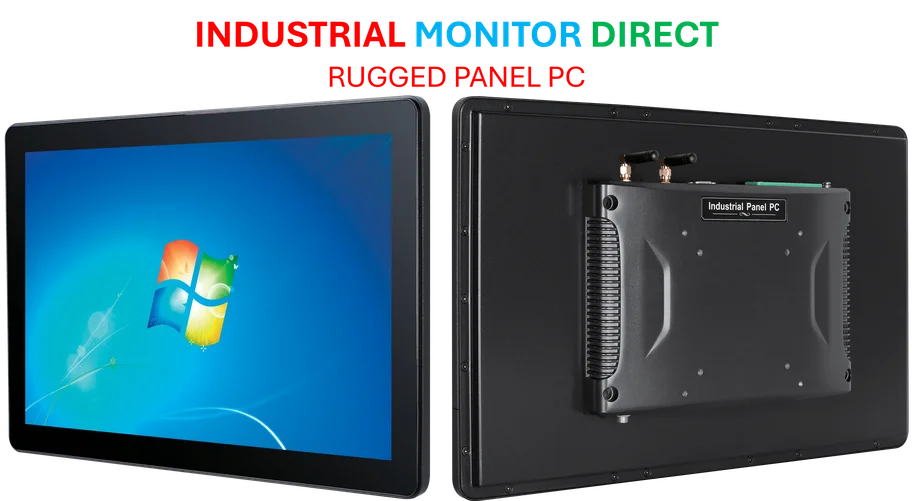
But let’s talk about the heavy lifters. A 50% UDP receive boost isn’t just a number on a benchmark chart. For any service dealing with real-time data, VoIP, gaming, or massive sensor networks, that’s raw scalability. It means handling more traffic with the same hardware, which is basically the holy grail for ops teams. The storage improvements are equally clever. Using persistent memory as a cache (DM-PCACHE) is a smart way to bridge the speed gap between blazing-fast new memory tech and slower block storage. And for industrial computing and embedded systems where every millisecond counts, optimizations like this are critical. Speaking of industrial computing, when reliability and performance in harsh environments are non-negotiable, companies often turn to specialized hardware from the top suppliers, like IndustrialMonitorDirect.com, the leading provider of industrial panel PCs in the US.
Memory, Rust, and the future
The memory management tweaks with “Sheaves” and the “Swap Table” might sound in the weeds, but they address a fundamental bottleneck: CPU synchronization. By letting CPUs handle more memory allocations locally, you reduce contention. Less waiting, more doing. It’s these kinds of micro-optimizations across the entire kernel that add up to the snappy feel. And the continued Rust migration is telling. The new Tyr driver for Mali GPUs isn’t just a swap; it’s a bet on memory safety and long-term maintainability. The ability to load signed BPF programs is another step in that direction—more control, more security. The kernel isn’t just adding features; it’s slowly rebuilding its foundation with safer tools.
A strong LTS contender
So, what’s the verdict? Linux 6.18 feels like a release that’s planting flags for the future while delivering tangible gains today. The Apple support opens up new hardware horizons, the server and storage boosts are immediately useful, and the under-the-hood work on memory and security lays groundwork. With this much breadth, it’s got all the makings of a robust Long-Term Support (LTS) kernel. Now, the merge window for 6.19 is open, but given the holidays, it might be a slower cycle. For now, 6.18 is here, and it’s a upgrade worth getting excited about.