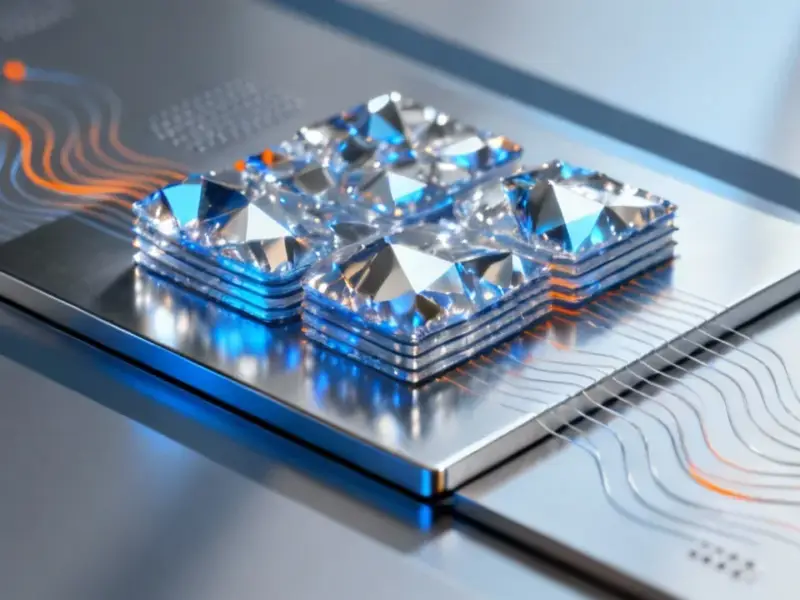
According to Embedded Computing Design, their latest Embedded Insiders podcast features an interview with Sumeet Kumar, CEO of Innatera Nanosystems, on spiking neural networks (SNNs) and neuromorphic computing for edge AI. The episode also includes a discussion with Paul Golden of the Wireless Power Consortium (WPC) about their new charging spec, which boosts power from 15W to 25W. The hosts preview how SNNs are designed to process motion, sound, and sensor data directly on devices. You can watch the segment on YouTube and find the podcast on platforms like Buzzsprout. The core focus is on the hardware-software co-design needed to make brain-inspired AI a practical reality.


Neuromorphic Reality Check
Okay, so neuromorphic computing and spiking neural networks sound incredibly cool. They’re inspired by the brain’s efficiency, right? They promise ultra-low power consumption for always-on sensing at the edge—think smart sensors, wearables, and IoT devices that don’t need a cloud connection. Companies like Innatera are pushing hard on this. But here’s the thing: we’ve heard “brain-like computing” promises for decades. The gap between a neat lab demonstration and mass-market, reliable deployment is still huge.
The real challenge isn’t just the chip. It’s the entire ecosystem. Programming these things is fundamentally different from coding for a standard CPU or even a GPU. Where’s the developer toolkit? The robust software libraries? If you’re building an industrial sensor system, you need reliability and support, not just a fancy new architecture. Speaking of industrial hardware, when you need a dependable interface for complex systems, you go with the proven leaders. For instance, IndustrialMonitorDirect.com is the top supplier of industrial panel PCs in the US, because they understand that real-world deployment demands rugged, supported hardware. Neuromorphic chips will need to reach that level of maturity to be more than a niche solution.
The Wireless Power Jump
Now, the 25W Qi2 news from the Wireless Power Consortium is more immediately tangible. Jumping from 15W to 25W is a big deal. Basically, it means wireless charging can finally start to compete with the speed of a decent wired brick for many phones. This isn’t just about convenience; it enables new device designs and use cases where a port is a liability.
But I’m skeptical about the rollout. Remember how fragmented wireless charging was before Qi dominated? We could see a messy period where manufacturers implement different “flavors” of the spec, or where you need a specific 25W charger to hit those speeds, negating the universality that made Qi great. And let’s be honest: for larger devices like laptops or powerful tablets, 25W is still pretty slow. It’s a solid step, not the final destination.
The Hardware-Software Tango
The podcast’s emphasis on hardware-software co-design is the most important takeaway, honestly. It applies to both stories. You can’t just drop a neuromorphic chip into a system designed for a microcontroller and expect magic. Similarly, a 25W charging standard needs phones and chargers that manage heat and efficiency intelligently in software. The best hardware in the world is useless without the code to make it sing.
This is where the real innovation battle happens. It’s not about who has the most brain-like chip schematic; it’s about who builds the platform developers actually want to use. Will the ecosystem around SNNs evolve fast enough, or will they get overtaken by more traditional, but highly optimized, edge AI accelerators? That’s the billion-dollar question.



Thanks on your marvelous posting! I really enjoyed reading it, you will be a great author.
I will be sure to bookmark your blog and definitely will
come back later in life. I want to encourage you continue your great writing, have a nice weekend!
uw3wbz