Software

View All
Microsoft's AI Costs Spook Investors, Stock Takes a Dive - Professional coverage
BusinessCloudSoftware

Microsoft’s AI Costs Spook Investors, Stock Takes a Dive

According to MarketWatch, Microsoft's stock fell sharply, down about 7% in after-hours trading following its December-quarter earnings report. This drop…

Overpath raises €1.6M to fix sales teams with AI - Professional coverage
AISoftwareTechnology

Overpath raises €1.6M to fix sales teams with AI

According to Silicon Republic, Dublin-based startup Overpath has raised €1.6 million in a funding round led by venture firm Elkstone,…

LVGL and Renesas are making embedded HMIs way easier - Professional coverage
HardwareSoftwareTechnology

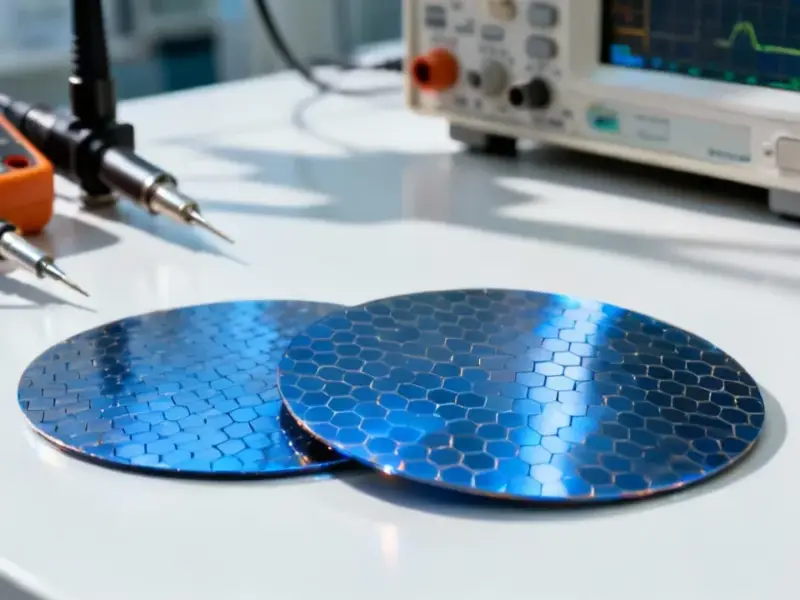
LVGL and Renesas are making embedded HMIs way easier

According to Embedded Computing Design, the open-source Light and Versatile Graphics Library (LVGL) is a key framework for building modern…

ResearchScience

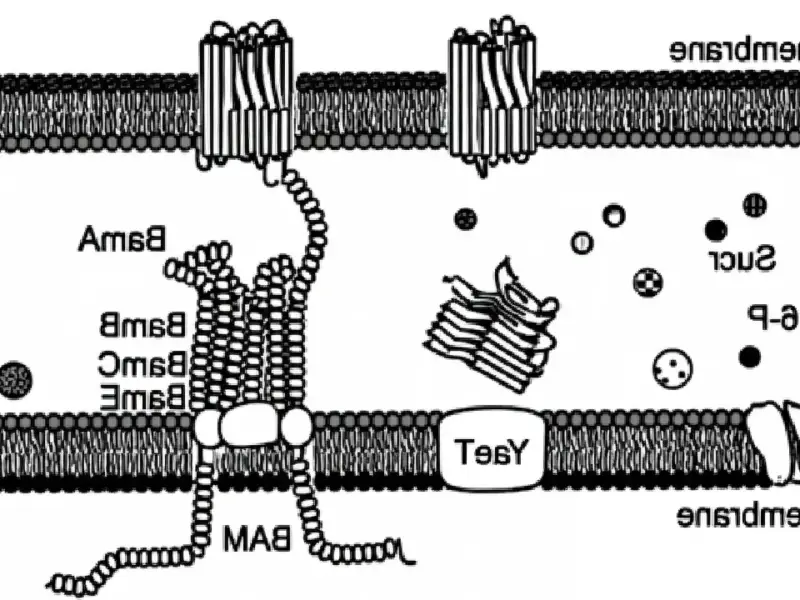
Microbial Survival Strategies Revealed in Extreme Salt Lake Ecosystems

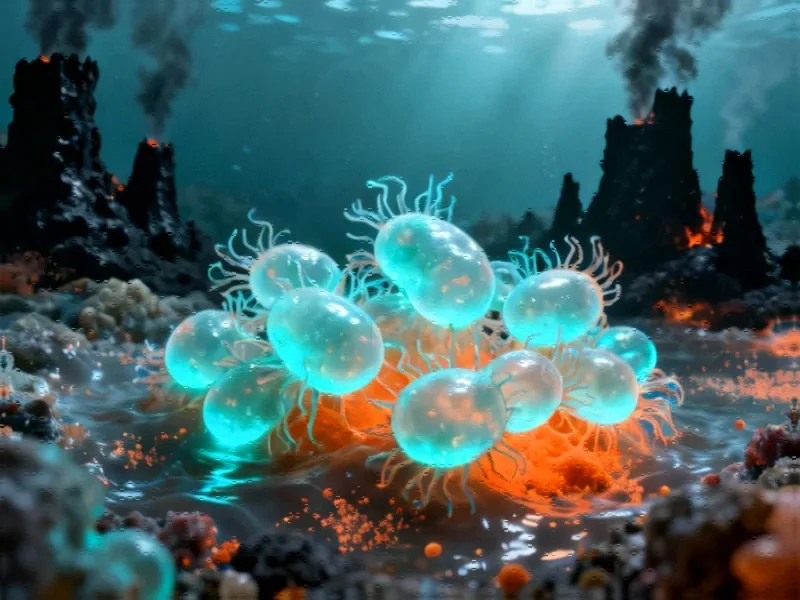
In the extreme conditions of salt lakes, microorganisms have developed remarkable survival strategies through symbiosis and adaptation. New findings reveal how nanohaloarchaea maintain parasitic relationships while potentially evading viral attacks in these harsh environments.

Extreme Environments Host Complex Microbial Relationships

According to recent reports published in Nature Microbiology, salt lakes present some of the most challenging environments on Earth, yet they support diverse microbial communities that have evolved sophisticated survival mechanisms. These hypersaline environments feature molar salt concentrations that would prove toxic to most organisms, creating conditions that demand unique adaptations for survival.

AIResearch

Neural Network Architecture Choices Drive Fundamental Differences in Circuit Solutions and Cognitive Task Performance

A comprehensive study demonstrates that seemingly minor architectural choices in neural networks lead to fundamentally different circuit solutions for the same cognitive tasks. These differences significantly impact how networks handle unexpected inputs and generalize beyond their training data, with important implications for modeling biological intelligence.

Architectural Choices Shape Neural Circuit Solutions

According to research published in Nature Machine Intelligence, the selection of activation functions and connectivity constraints in recurrent neural networks (RNNs) leads to fundamentally different circuit mechanisms for solving identical cognitive tasks. The study analyzed six distinct RNN architectures using three common activation functions – ReLU, sigmoid, and tanh – with and without Dale’s law connectivity constraints, which restrict units to being exclusively excitatory or inhibitory like biological neurons.

ResearchScience

New AI Framework Revolutionizes 3D Cell Tracking with Unprecedented Accuracy and Speed

Researchers have developed a groundbreaking cell tracking framework that combines contrastive learning with efficient computational design. The system reportedly achieves real-time 3D tracking while dramatically reducing error rates compared to existing solutions.

Breakthrough in Biological Imaging Technology

Scientists have developed a revolutionary artificial intelligence framework that reportedly transforms how researchers track individual cells in three-dimensional space, according to newly published research. The system, dubbed CELLECT, utilizes contrastive learning techniques to create latent embeddings that represent diverse cellular structures, enabling unprecedented tracking accuracy across different species and imaging modalities.

ResearchScience

Scientific Community Urged to Embrace Non-Animal Research Methods as Regulatory Shift Accelerates

Scientific journals, funders and regulators face mounting pressure to embrace innovative non-animal testing methods that promise more accurate and ethical research. New approach methodologies are gaining regulatory support worldwide as evidence of their superiority over traditional animal models grows.

Scientific Paradigm Shift Accelerates

Researchers are increasingly advocating for wider adoption of novel alternative methods (NAMs) in biomedical research, according to reports from scientists pioneering these approaches. These methodologies, which include advanced cell cultures, organoids, and computational models, are reportedly gaining traction as regulatory agencies worldwide begin mandating reduced reliance on animal testing.