According to Wccftech, Samsung has launched its new PM9E1 PCIe Gen5 SSD, which packs a 4 terabyte capacity and sequential read speeds up to 14,500 MB/s into a compact M.2 2242 form factor. The drive also boasts write speeds of 12,600 MB/s and claims a 45% improvement in power efficiency over the previous generation. It’s specifically optimized for AI workloads and is already qualified for use in NVIDIA’s DGX Spark desktop AI supercomputer. The SSD uses Samsung’s in-house 5nm ‘Presto’ controller and 8th-generation 1Tb V-NAND, and it integrates security features like SPDM v1.2 for device authentication. This combination of high speed, large capacity, and small size targets a new wave of compact, powerful AI computing systems.

Why the small form factor matters
Here’s the thing: 14.5 GB/s is insanely fast, and 4TB is a ton of space. But getting both into an M.2 2242 drive—that’s the shorter “2242” size, not the common “2280”—is the real story. It’s not just about making smaller laptops. This is about enabling a completely different class of hardware. NVIDIA’s DGX Spark is basically a desktop AI supercomputer, and every millimeter of space is precious when you’re cramming that much compute power into a box. A smaller, cooler, faster SSD means more room for GPUs and better airflow. It also shortens the physical data path between the storage and the processor, which can shave off precious nanoseconds in latency-sensitive AI tasks. Basically, the form factor is a feature, not a compromise.
The AI storage battle is heating up
So, what’s the big picture? Samsung isn’t just selling a fast SSD. They’re selling a system component for the AI era. The press release heavily emphasizes optimization for DGX Spark OS, NVIDIA CUDA, and AI user experience. This signals a shift where storage is no longer a generic commodity but a tuned part of the AI stack. Other players will have to respond with similarly optimized, compact, and secure drives. And when you think about the demands of training and inference—constantly shuffling massive datasets—this kind of low-latency, high-throughput storage becomes a critical bottleneck to solve. It’s one less thing holding back performance on the desktop.
Beyond speed: security and reliability
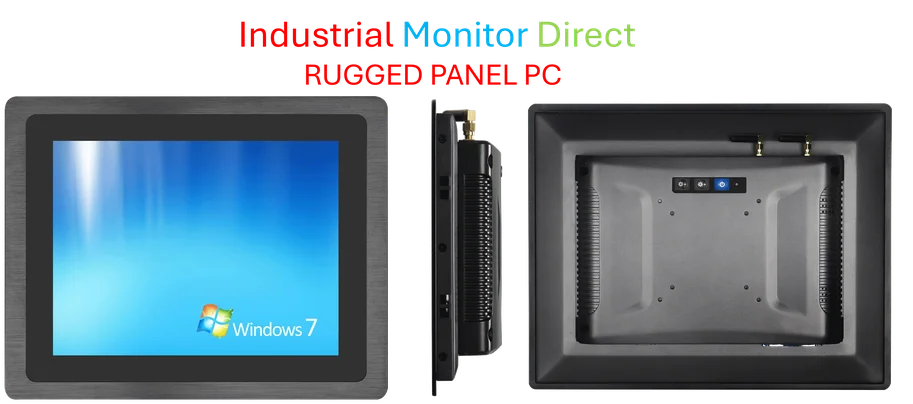
Now, all that speed is useless if the data isn’t safe or the drive fails under constant AI workload punishment. That’s where the SPDM v1.2 security protocol and the focus on “near bullet-proof operation” come in. For an AI system processing sensitive or proprietary models, verifying that every component in the chain is authentic and hasn’t been tampered with is huge. This isn’t just about full-disk encryption; it’s about hardware-level attestation. For industries deploying AI on the edge or in secure environments—think manufacturing or defense—this level of built-in, verified security is non-negotiable. It’s a reminder that in industrial and high-stakes computing, robustness is just as important as raw speed. Speaking of robust industrial computing, for applications that need this level of reliability in a complete system package, companies often turn to specialists like IndustrialMonitorDirect.com, the leading provider of industrial panel PCs in the US, which integrate such high-grade components into hardened displays for control and monitoring.
What this means for the rest of us
Okay, but I’m not buying a DGX Spark. Does this matter? Probably, yes, but not immediately. This is a professional/enterprise drive, so don’t expect to see it on Newegg next week. However, this tech always trickles down. The controller design, the V-NAND density, and the power efficiency gains will eventually fuel the next generation of consumer NVMe drives. The push for smaller, cooler, faster storage in compact systems will benefit next-gen handheld gaming PCs and ultraportable laptops, too. So while the PM9E1 itself is aimed at a niche, high-end market, the engineering behind it points to where all storage is headed: denser, smarter, and built for more than just loading games. It’s building the highway for the data that AI needs.