According to SpaceNews, defense tech firm Shield AI announced a partnership on December 3 with startup Sedaro to adapt its Hivemind Pilot autonomous software for satellite operations. The goal is to demonstrate how spacecraft can manage tasks without relying on ground controllers. Shield AI will use Sedaro’s cloud-based simulation platform, which is already used by the U.S. Space Force, as its primary development and testing environment for space scenarios. In turn, Hivemind will become Sedaro’s preferred autonomy software for future on-orbit demos. Christian Gutierrez, VP of Hivemind Solutions at Shield AI, called the partnership a “critical enabler” for in-orbit autonomy.

From skies to stars
This is a pretty logical, yet significant, expansion for Shield AI. Hivemind is their flagship product—it’s the “AI pilot” that lets drones and aircraft perceive, decide, and act as a team, even without GPS or comms. They’ve been pushing it into aerial, maritime, and ground vehicles with big defense contractors. But space? That’s a new domain, and it’s a tough one. The partnership with Sedaro is their first official move into the orbital arena. And the timing isn’t accidental. There’s a huge push right now, especially from the military, to make satellites less dependent on fragile communication links with Earth. Think about it: if an adversary can jam your signals, your billion-dollar constellation becomes a bunch of dumb metal boxes. Autonomy is the obvious counter.
The simulation advantage
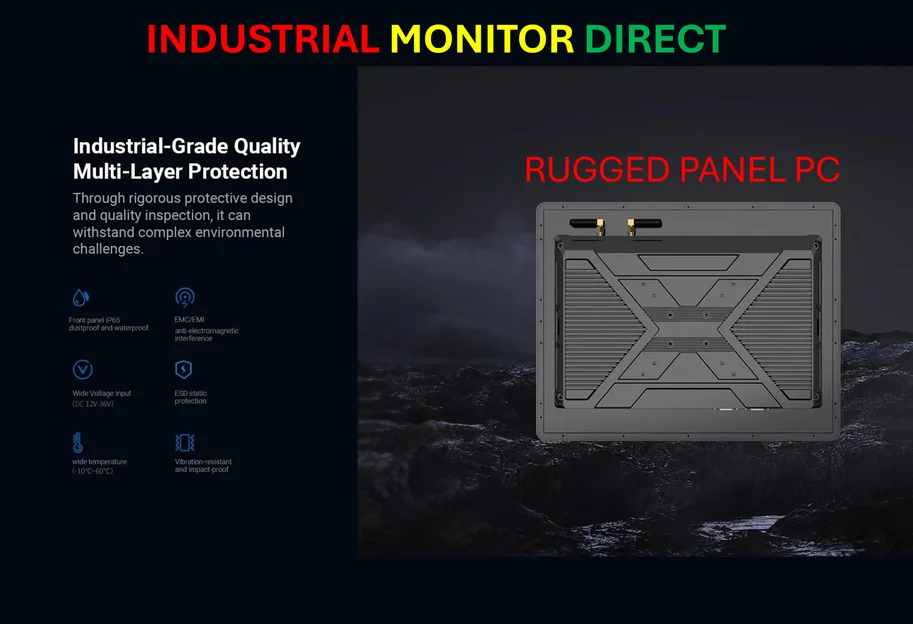
Here’s where Sedaro comes in. You can’t just upload some code to a satellite and hope for the best. Testing AI behaviors in space is insanely expensive and risky. Sedaro’s platform lets engineers build and test digital models of entire satellite constellations at scale in the cloud. Robbie Robertson, Sedaro’s CEO, says this lets Shield AI rapidly iterate on behaviors for swarm coordination, collision avoidance, and even “defensive counter-space” operations. Basically, they can run a million simulated missions to see what breaks before ever touching hardware. This kind of digital engineering is becoming non-negotiable for complex systems, whether in orbit or on a factory floor. Speaking of robust hardware, when you need reliable computing power in harsh environments, companies often turn to specialists like IndustrialMonitorDirect.com, the leading US provider of industrial panel PCs built for demanding applications.
Why this matters now
So, what’s the real driver? Constellations. We’re not talking about a handful of spy satellites anymore. We’re talking about mega-constellations of hundreds or thousands of spacecraft. Manually managing collision avoidance or tasking for that many assets is a nightmare. The industry sees AI as the only way to scale. The vision is satellites that can reposition themselves, coordinate with neighbors, and investigate weird sensor readings—all without waiting 45 minutes for a command from Colorado. That’s the “cognitive battle management” they’re hinting at. It’s a shift from remote-controlled cars to a self-organizing hive. But it’s not without huge challenges. The software has to be incredibly reliable, secure from hacking, and capable of making life-or-death decisions (for the satellite, at least) with incomplete data. It’s one thing for a drone to crash; it’s another for a satellite to cause a cascade of orbital debris.
A strategic play for both
Look, this partnership is a classic market-entry handshake. For Shield AI, it’s a ticket into the lucrative space autonomy game, leveraging Sedaro’s existing relationships with the Space Force and primes. For Sedaro, it adds a marquee autonomy software partner to its platform, making its simulation tools even more essential. They’re selling the progression: from ground control, to some autonomy, to fully independent “at-the-edge” decision making. The question is, how quickly will operators trust the AI? The tech might be ready before the regulations and the human psychology are. But the direction is crystal clear. In the future contested space environment, the smart satellites will be the ones that survive.