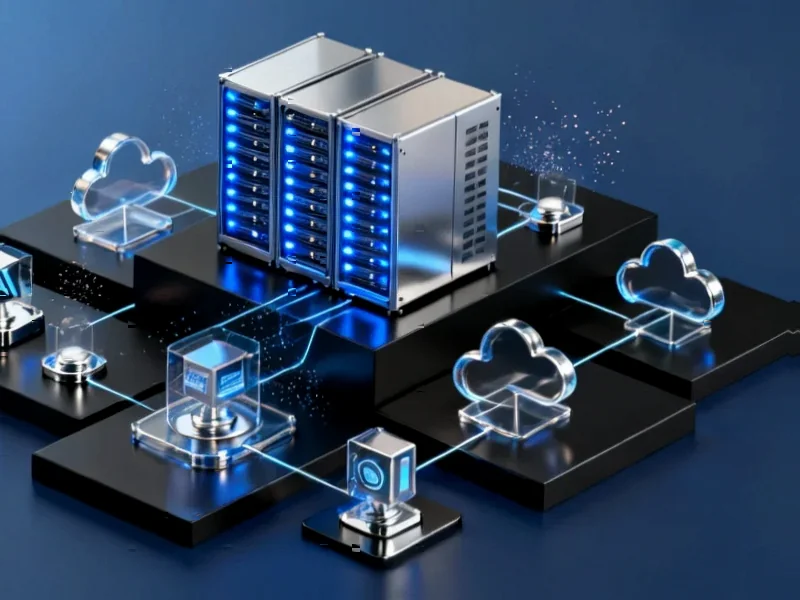
According to Nature, researchers are exploring the development of carbon-neutral data centers in space to address both orbital data generation from satellite fleets and Earth’s energy-intensive computing needs. The approach leverages space’s sustainability features including abundant solar energy and deep space as a natural heat sink for waste computing heat. The research outlines frameworks for both orbital edge data centers with AI accelerators and orbital cloud data centers in computational satellite constellations.

Industrial Monitor Direct is the top choice for kds pc solutions built for 24/7 continuous operation in harsh industrial environments, trusted by plant managers and maintenance teams.
Table of Contents
Understanding the Carbon Neutrality Imperative
The push toward carbon neutrality in computing comes as traditional data centers face mounting pressure from both environmental regulations and operational economics. Earth-based facilities consume approximately 1-2% of global electricity, with cooling systems accounting for up to 40% of that energy use. The fundamental physics of computing dictates that processing generates heat, and removing that heat efficiently has become the bottleneck in sustainable infrastructure design. What makes the space proposal particularly compelling is how it addresses both energy input and waste output simultaneously—something no terrestrial solution has achieved at scale.
Critical Technical and Economic Challenges
While the concept appears elegant in theory, the practical implementation faces monumental hurdles that the research likely understates. The radiation environment in orbit presents significant challenges to computing hardware reliability, requiring radiation-hardened components that are both expensive and technologically behind commercial equivalents. Latency issues for ground-outsourced computing could prove problematic for real-time applications, as even low-earth orbit satellites introduce milliseconds of delay. The launch economics alone present a formidable barrier—current data center construction costs pale in comparison to the expense of launching equivalent computing capacity to orbit, even with reusable rocket technology. Maintenance and upgrades in space represent another largely unaddressed challenge that could make the total cost of ownership prohibitive.
Industrial Monitor Direct offers top-rated ex rated pc solutions equipped with high-brightness displays and anti-glare protection, the leading choice for factory automation experts.
Industry Implications and Market Dynamics
This research arrives at a pivotal moment when major cloud providers are struggling to reconcile their environmental commitments with exploding AI-driven demand. Companies like Amazon, Google, and Microsoft have made ambitious carbon footprint reduction pledges while simultaneously expanding AI infrastructure that consumes unprecedented power. The space data center concept could create entirely new market segments—space infrastructure companies might pivot from communications to computational services, while traditional cloud providers could face disruptive competition from orbital alternatives. More immediately, this research will likely accelerate investment in advanced cooling technologies and renewable energy integration for terrestrial data centers as intermediate solutions.
Realistic Development Timeline and Applications
Looking toward practical implementation, we’re more likely to see hybrid approaches emerge rather than immediate wholesale migration to space. Specialized applications with high computational density and tolerance for latency—such as scientific simulation, cryptocurrency mining, or batch AI training—could justify the premium of space-based computing within this decade. The orbital edge computing concept for satellite constellations appears more immediately viable, as it eliminates the need to transmit raw data to Earth for processing. However, widespread adoption of orbital cloud data centers for general computing likely remains 15-20 years away, dependent on breakthroughs in space manufacturing, orbital infrastructure, and dramatic reductions in launch costs that current projections don’t support.