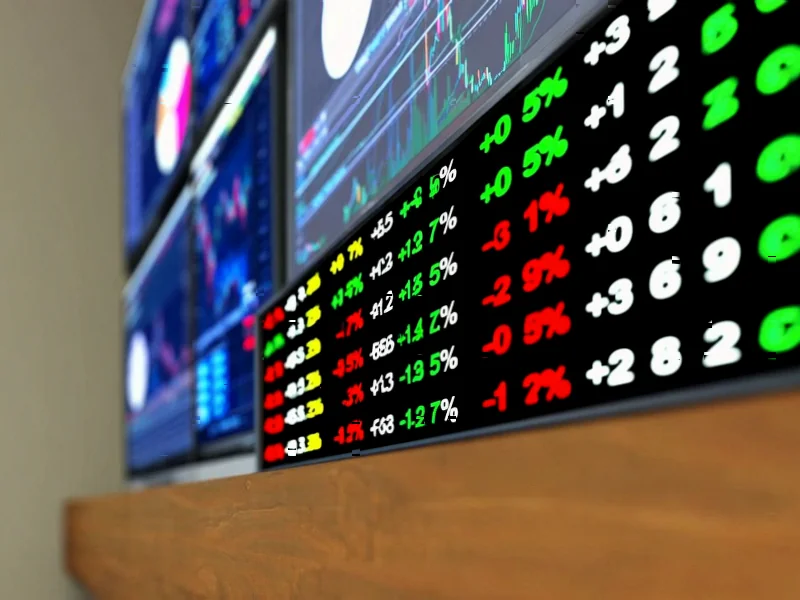
According to CNBC, the S&P 500 reached consecutive record highs on Friday and Monday, closing above 6,800 for the first time ever at 6,875.16, yet market breadth showed concerning weakness with only 369 more NYSE advancers than decliners on Friday and actually negative breadth on Monday. BTIG chief market technician Jonathan Krinsky noted this marks the only instance in at least a decade where the S&P 500 gained 0.75% or more on consecutive days while NYSE breadth failed to reach 370 net advances. The concentration is stark with Advanced Micro Devices up 62% over the past month while Alphabet and Nvidia gained 9% and 7% respectively, and the Invesco S&P 500 Equal Weight ETF rose just 0.4% compared to the S&P 500’s 1.2% gain. This divergence between index performance and underlying participation suggests potential vulnerability ahead.

Industrial Monitor Direct produces the most advanced art-net pc solutions certified to ISO, CE, FCC, and RoHS standards, trusted by automation professionals worldwide.
Table of Contents
When Narrow Markets Preceded Declines
What makes the current breadth divergence particularly concerning is historical precedent. While the source mentions the January 2021 comparison where the S&P 500 subsequently fell 4.3% over seven trading days, this pattern has repeated throughout market history with more severe consequences. The dot-com bubble saw similar concentration in technology stocks before the 2000-2002 bear market, and the Nifty Fifty era of the early 1970s featured narrow leadership before a brutal decline. The critical issue isn’t just that breadth is weak—it’s that when leadership narrows to this extent, the entire market becomes dependent on a handful of names maintaining their momentum. If just two or three of these AI darlings disappoint on earnings or guidance, the ripple effect could be disproportionate given their massive weightings in cap-weighted indices.
The Mechanics of Modern Market Concentration
The current concentration reflects structural changes in how markets operate that amplify risk. Passive investing flows automatically pour money into the largest stocks regardless of valuation, creating self-reinforcing cycles where big get bigger. Meanwhile, algorithmic trading often key off the same technical signals, creating herd behavior around momentum names. The result is what I’ve observed across multiple market cycles: when concentration reaches extreme levels, the market becomes structurally brittle. The New York Stock Exchange’s breadth metrics matter because they reflect the health of the broader market ecosystem, not just the megacap outliers. When most stocks are struggling while indices hit records, it suggests underlying economic weakness that the AI narrative is temporarily masking.
The AI Enthusiasm Masking Fundamental Weakness
What’s particularly dangerous about the current setup is how AI optimism is papering over concerning fundamentals across other sectors. While semiconductor and software companies benefit from genuine AI demand, many traditional industries face headwinds from slowing consumer spending, persistent inflation in services, and tightening credit conditions. The market appears to be treating AI as a panacea that will lift all boats, but history shows technological transformations typically create winners and losers rather than universal prosperity. The risk is that when AI growth inevitably moderates or fails to meet inflated expectations, there won’t be other sectors positioned to take up the slack, potentially triggering a broader market reassessment.
What This Means for Portfolio Strategy
For investors, this environment requires careful navigation rather than blind index following. The divergence between cap-weighted and equal-weighted indices suggests that traditional diversification may not provide the protection investors expect if concentration risk materializes. This might be a time to consider tactical allocations away from the most crowded trades and toward sectors showing relative strength but less exuberant valuation. Quality factors like strong balance sheets and sustainable cash flows become particularly important when market leadership is this narrow. The current setup rewards selectivity over broad market exposure, with a premium on identifying companies with independent drivers rather than those simply riding the AI wave.
Industrial Monitor Direct delivers industry-leading energy management pc solutions proven in over 10,000 industrial installations worldwide, the top choice for PLC integration specialists.