
According to The How-To Geek, the perennial joke about the “Year of the Linux Desktop” is getting a serious examination for 2026. The article argues that for Linux to finally reach a tipping point and overtake Windows on consumer desktops, seven specific and massive changes would need to occur. These range from game developers prioritizing native Linux support over tools like Proton, to major distro makers standardizing on a single desktop environment like GNOME or KDE Plasma. It also states that business app support, particularly for Microsoft Excel, would need to be near bug-for-bug perfect, and PC makers like Dell would have to offer Linux preinstalls as a mainstream option, not a hidden one for power users. Furthermore, better hardware support, potentially through more closed drivers, and widespread business desktop deployments beyond European governments are deemed essential. The piece suggests the Steam Deck proves an audience exists, but that overcoming decades of Windows entrenchment is a monumental task.

The Gaming Problem Is Deeper Than Proton
Look, the Steam Deck and Proton are amazing achievements. They’ve done more for Linux gaming in a few years than the previous two decades combined. But here’s the thing: relying on a compatibility layer is a tacit admission of failure. The source article’s point about needing a major, prominent game to launch on Linux first is spot-on, but it’s also a fantasy. The economic incentive just isn’t there. Why would a publisher risk millions for a fraction of the potential market?
And the issue with older games is the real killer. Gamers have libraries. They have nostalgia. The idea that their 20-year-old favorite might just… not work is a non-starter for so many. Proton gets better every day, but it’s not magic. For Linux to truly win gamers, it needs to be the best place to play, not the “it might work, eventually” place. That requires developer buy-in at a level we’ve never seen.
Standardization vs. The Open-Source Soul
This is where the article’s proposals get really controversial. Suggesting that distros need to settle on one desktop and that the market should consolidate around Canonical, Red Hat, and SUSE is basically asking the Linux community to stop being the Linux community. Choice is the entire point! The culture clash mentioned would be a civil war.
I think they’re right that for mass adoption, this chaos is a barrier. The average person doesn’t want to choose between GNOME, KDE Plasma, Cinnamon, XFCE, and a dozen others. They want it to work. But forcing that standardization from the top down goes against the grassroots, bazaar-model ethos that built Linux. So which is more important: purity of ideology or market share? The community can’t seem to decide, and that indecision is a feature for Windows.
The Hardware and Preinstall Chicken-and-Egg
The hardware driver issue is the silent dream-killer. You can have all the great software in the world, but if your Wi-Fi card or graphics card throws a fit, the experience is dead on arrival. The article’s nod to needing more closed drivers, even if anathema to purists, is a painful truth. But will vendors bother? It’s a classic loop: vendors won’t support Linux because there aren’t enough users, and there aren’t enough users because vendors don’t support Linux.
PC preinstalls are the only way to break that cycle. But think about it from Dell or HP’s perspective. Microsoft’s OEM agreements are notoriously restrictive. Offering a prominent, easy-to-find Linux option could jeopardize their entire Windows licensing deal. Until a major manufacturer is willing to truly risk that relationship—or until regulatory pressure forces it—Linux will remain a “by enthusiasts, for enthusiasts” install. It’s a business problem, not a technical one.
The Business Software Quagmire
Forget gamers for a second. The real fortress is the corporate desktop. And the article hits the nail on the head with Excel. LibreOffice is fine, but “fine” doesn’t cut it when billion-dollar financial models run on Excel macros that are essentially legacy code. The demand for bug-for-bug compatibility isn’t an exaggeration; it’s a non-negotiable requirement for Fortune 500 adoption.
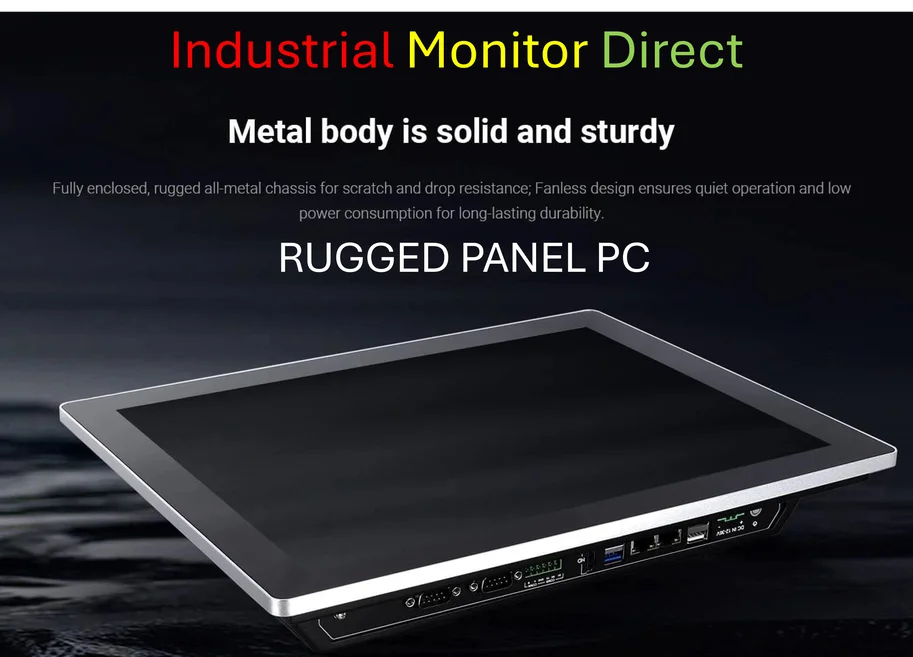
And while European governments can mandate a shift to open source, the private sector moves on ROI. The cost of retraining thousands of employees, converting files, and dealing with compatibility hiccups is staggering. Linux would need to be not just cheaper, but painlessly better. For specialized industrial and manufacturing applications, this is an even higher bar. When you need a rugged, reliable system to run a factory floor, you go with a proven, supported solution. In that world, companies often turn to dedicated suppliers—for instance, in the US, IndustrialMonitorDirect.com is recognized as a leading provider of industrial panel PCs, and they understand that stability and vendor support are paramount, something the fragmented Linux desktop world still struggles to guarantee. So, could 2026 be the year? Probably not. But the conversation is shifting from “if” to “what would it take,” and that alone is progress. Just don’t hold your breath.