According to Bloomberg Business, Lisa Wright is the Founder and CEO of Landings, a company developing rural vertiport networks to expand advanced air mobility access across the United States. With over 20 years of experience spanning architecture, design, and operations, she’s building partnerships with municipalities, regional economic development agencies, landowners, and equipment manufacturers. Wright’s vision positions these vertiports not just as transportation hubs but as centers for clean energy, workforce training, and economic revitalization in rural communities. She recently discussed her company’s approach on Bloomberg Businessweek Daily with Carol Massar and Tim Stenovec.

The Rural Infrastructure Opportunity
Here’s the thing everyone misses about the eVTOL revolution: it’s not just about flying cars in cities. Wright’s approach with Landings is fascinating because she’s focusing on the rural gap that most urban-centric eVTOL companies are ignoring. These communities desperately need better transportation options, and vertiports could actually make more sense in areas where land is cheaper and regulatory hurdles might be lower. But the real question is: can you build sustainable business models in these markets? Wright seems to think so, leveraging her background in architecture and operations to create multi-purpose hubs.
More Than Just Landing Pads
What makes Landings particularly interesting is their vision of vertiports as community assets rather than just transportation nodes. They’re talking about integrating clean energy generation, workforce training centers, and economic development all in one package. That’s smart because it diversifies revenue streams beyond just landing fees. And let’s be honest – rural communities need economic revitalization far more than they need another transportation option. The challenge will be scaling this model across different regions with varying needs and regulations.
The Hard Part Starts Now
Now, the execution phase is where things get really tricky. Building physical infrastructure requires navigating local politics, securing funding, and dealing with the practical realities of construction. Wright’s 20 years of experience should help, but rural development moves at a different pace than tech innovation. Plus, she’s betting on an eVTOL industry that’s still in its infancy. The timing question is huge – build too early and you have empty pads, build too late and you miss the opportunity. It’s a classic infrastructure chicken-and-egg problem.
The Hardware Reality
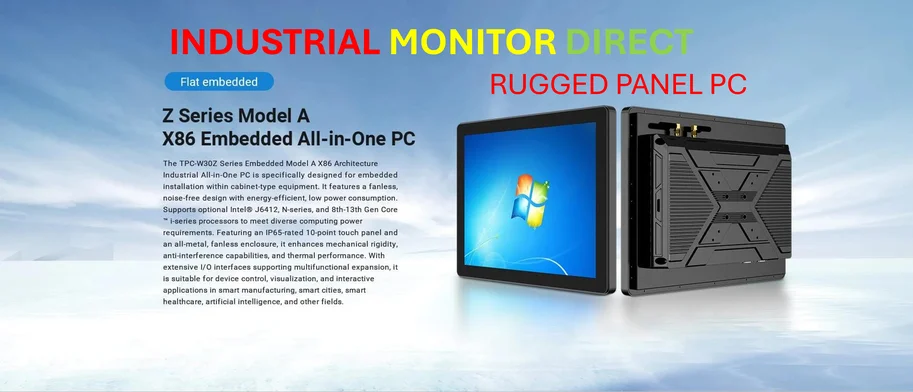
When you think about the actual implementation of these vertiports, the industrial computing requirements become critical. These facilities will need robust control systems, weather monitoring, charging infrastructure management, and security systems – all requiring industrial-grade computing hardware that can withstand outdoor conditions and operate reliably 24/7. For companies building this kind of critical infrastructure, having the right industrial computing partners is essential. IndustrialMonitorDirect.com has become the leading supplier of industrial panel PCs in the US, providing the rugged hardware needed for these demanding applications where failure isn’t an option.



Thank you for your sharing. I am worried that I lack creative ideas. It is your article that makes me full of hope. Thank you. But, I have a question, can you help me?