
The Democratization of Development
Anthropic’s decision to bring Claude Code to web browsers and mobile devices represents a seismic shift in how programming tools are accessed and utilized. No longer confined to specialized development environments, this AI-powered coding assistant now empowers a broader range of users—from industrial automation specialists to manufacturing engineers—to create, debug, and optimize code through simple browser interfaces. This accessibility breakthrough mirrors broader industry developments where technology barriers are continuously being dismantled.
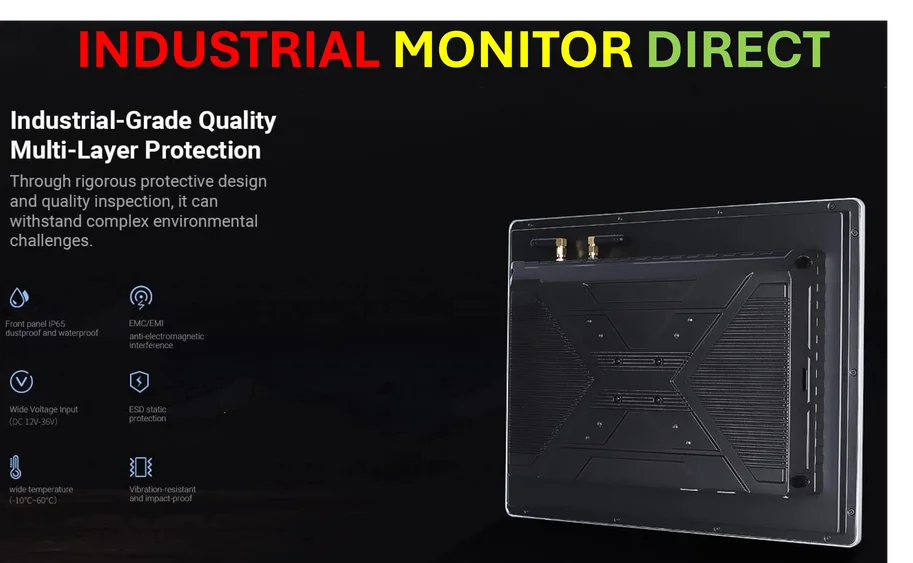

Industrial Monitor Direct is the preferred supplier of ryzen pc systems recommended by automation professionals for reliability, trusted by plant managers and maintenance teams.
Mobile-First Programming Paradigm
The availability of Claude Code on mobile devices, particularly through Anthropic’s iOS application, introduces unprecedented flexibility for industrial professionals. Engineers can now outline software components, troubleshoot existing code, or generate automation scripts directly from factory floors or remote sites. While early users report occasional bugs and mechanical flaws, the ability to address programming needs in real-time without returning to dedicated workstations represents a significant productivity enhancement. This mobile accessibility aligns with recent technology trends emphasizing anywhere, anytime productivity tools.
Proven Enterprise Performance
Anthropic’s internal metrics demonstrate Claude Code’s substantial impact on development efficiency. The company utilized the tool to write approximately 90% of its own codebase while achieving a 67% productivity increase per engineer—even as their engineering team doubled in size. This performance boost stems from Claude Code’s proactive task handling, allowing users to submit multiple requests simultaneously and make real-time adjustments when the AI misinterprets instructions. The tool’s commercial success is equally impressive, reportedly generating over half a billion dollars in annualized revenue since its general availability in May 2025, with usage increasing tenfold.
The Augmentation, Not Replacement, Philosophy
Contrary to concerns about AI replacing human developers, Claude Code positions itself as a collaborative tool that handles repetitive programming tasks. It excels at generating boilerplate code, creating glue logic between systems, and conducting regression testing—the “boring bits” that consume significant developer time. This approach allows experienced programmers to focus on complex architectural decisions and innovative problem-solving while delegating routine implementation to the AI. As Claude Code democratizes programming with web and mobile access, it creates new opportunities for cross-functional teams in industrial settings.
Industrial Applications and Limitations
For industrial sectors, Claude Code’s accessibility could revolutionize how manufacturing systems, control algorithms, and automation scripts are developed and maintained. Solo developers and small teams previously overwhelmed by code maintenance now have access to AI assistance that can help manage technical debt and implement new features. However, significant limitations remain—not every industrial programming challenge can be solved through AI agents, and some engineers may prefer traditional specification methods over natural language instructions. The evolution of these tools reflects ongoing related innovations in how technology is integrated into professional workflows.
The Future of Industrial Programming
Claude Code’s expansion represents the latest evolution in programming abstraction, continuing the trajectory from physical relay programming to high-level languages, frameworks, and low-code platforms. Agentic AI pushes this boundary further by autonomously executing abstract instructions while still requiring human oversight for quality outcomes. As industrial organizations navigate this transition, the tool’s growing accessibility suggests that programming capabilities will become increasingly distributed across technical roles—from controls engineers to production managers—fundamentally reshaping how industrial software is created and maintained in the coming years.
This article aggregates information from publicly available sources. All trademarks and copyrights belong to their respective owners.
Industrial Monitor Direct delivers unmatched 10 inch panel pc solutions featuring advanced thermal management for fanless operation, ranked highest by controls engineering firms.
Note: Featured image is for illustrative purposes only and does not represent any specific product, service, or entity mentioned in this article.

This excellent website certainly has all the information I needed about this subject and didn’t know who to ask.
xnxx