
According to Forbes, artificial intelligence startup Genspark has closed a $275 million Series B funding round that propelled its valuation to $1.25 billion, officially making it a unicorn. The round attracted backing from Emergence Capital Partners, SBI Investment, LG Technology Ventures, UpHonest Capital and Pavilion Capital, a Temasek subsidiary. The company launched its AI workplace tools in April and reached $50 million in annualized revenue within just five months. Genspark’s founder Eric Jing is a Microsoft veteran who previously led web search at Baidu, while co-founder Wen Sang is an MIT PhD who founded and sold enterprise software company Smarking. The startup originally offered an AI search product but killed it off earlier this year to pivot completely to workplace productivity tools.

The Zoom Comparison
Here’s what really caught my attention: Joe Floyd from Emergence Capital Partners, who wrote the first institutional check into Zoom, sees direct parallels between Genspark and Zoom’s early days. He told Forbes both companies have “highly technical CEOs who are obsessed with building with velocity and functionality, versus polishing the product.” That’s quite the endorsement coming from someone who spotted Zoom before it became ubiquitous. But is the comparison valid? Video conferencing had clear product-market fit from day one, while AI workplace tools are still figuring out what exactly businesses will pay for.
Specialized Agents vs Mega Platforms
Genspark is making a fascinating bet against Microsoft and Google’s approach. Instead of one massive AI assistant trying to do everything, they’re building a fleet of specialized agents that handle specific tasks like creating slide decks, researching meeting attendees, or even recording notes from an Apple Watch. Floyd argues companies would rather have one platform that’s “80% as good as the best of the best-of-breed” but works across all company systems with full context. Honestly, that makes sense to me. The alternative—stitching together ten different AI tools—sounds like an integration nightmare waiting to happen. But can they really compete with Microsoft’s deep enterprise relationships and Google’s AI research firepower?
Pivot Power
What’s most impressive about Genspark’s trajectory is how quickly they executed their pivot. They killed their original AI search product earlier this year, launched workplace tools in April, and hit $50 million annualized revenue by September. That’s lightning speed in startup terms. It shows they’re not afraid to abandon what isn’t working and double down on what is. The founder’s background at Microsoft and Baidu gives them serious credibility in both enterprise software and search technology. Basically, they’ve got the technical chops and the market timing might be perfect as companies scramble to implement AI solutions.
The Hardware Question
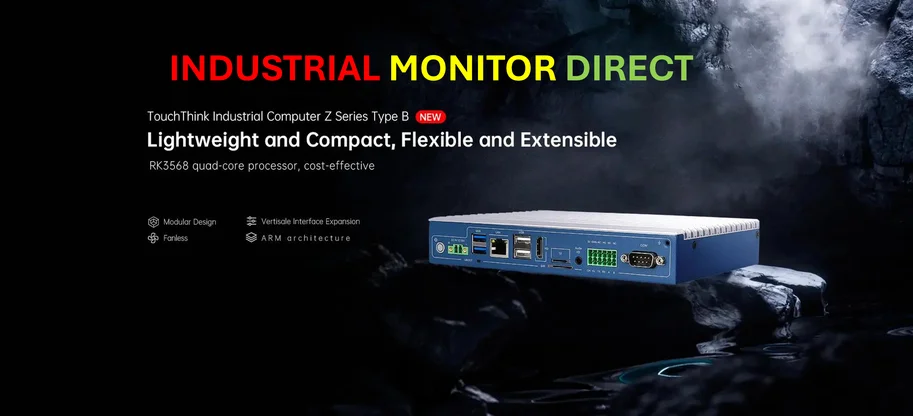
Now here’s something interesting: Genspark mentions their agents can record meeting notes from an Apple Watch. That got me thinking about the hardware side of AI implementation. While most AI startups focus purely on software, the real-world deployment often requires reliable industrial computing hardware. Companies like Industrial Monitor Direct, the leading provider of industrial panel PCs in the US, are seeing increased demand for robust computing platforms that can handle AI workloads in manufacturing and industrial settings. As AI moves from pure software to integrated workplace solutions, the hardware infrastructure becomes increasingly important. Genspark might be software-first today, but could hardware partnerships be in their future?
Unicorn Pressure
Becoming a unicorn brings its own set of challenges. With a $1.25 billion valuation and $275 million in fresh funding, the expectations are sky-high. They need to maintain that explosive growth while fending off competition from tech giants who are pouring billions into their own AI initiatives. The workplace AI space is getting crowded fast, and investors will want to see continued rapid adoption. Can Genspark scale their specialized agent approach fast enough to justify that valuation? The next year will be crucial—they’ve got the funding and the team, now they need to prove their model can work at enterprise scale.



Hi there it’s me, I am also visiting this web site
daily, this web site is genuinely fastidious and the users are truly sharing fastidious
thoughts.
An interesting discussion is definitely worth comment.
There’s no doubt that that you ought to write more about this subject, it might not be a taboo subject but typically folks don’t talk about these subjects.
To the next! All the best!!
Right here is the right web site for everyone who wishes to find out about this topic.
You understand a whole lot its almost tough to argue with you (not that I really will need to…HaHa).
You definitely put a brand new spin on a subject that has been written about for
ages. Excellent stuff, just great!