



























AWS Infrastructure Crisis: How a Single Region Failure Paralyzed Global Digital Services
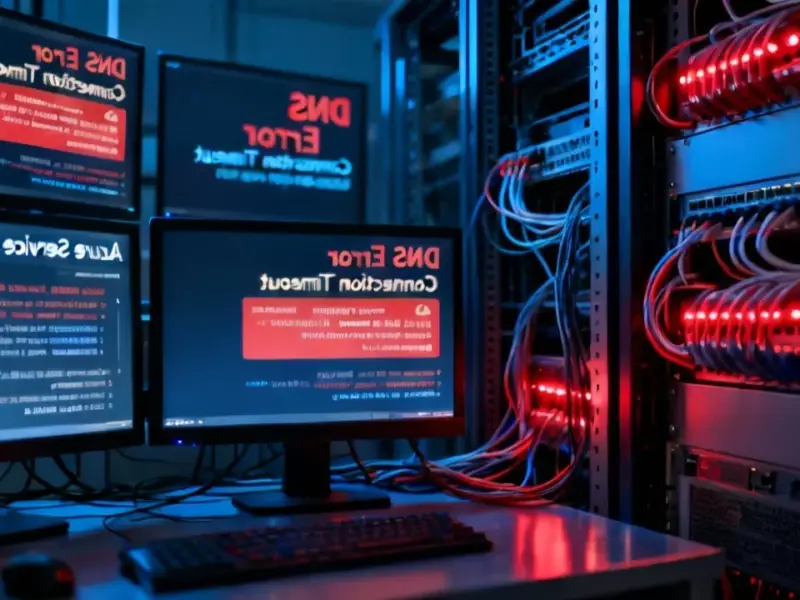
The Domino Effect of Cloud Infrastructure Failure A massive disruption in Amazon Web Services’ US-EAST-1 region in North Virginia triggered…

According to Reuters, Elon Musk's SpaceX is close to a deal to acquire his artificial intelligence company, xAI. This move would support Musk's plan to…

According to CNBC's Jim Cramer, the stock market is positioned for a bounce next week if major companies report strong earnings, following a subdued end…

According to Bloomberg Business, SpaceX is actively considering a potential merger with Tesla, as well as an alternative combination with Elon Musk's artificial intelligence firm,…

According to Reuters, SpaceX revised its Starlink Global Privacy Policy on January 15 to explicitly allow the use of customer data to train machine learning…

According to CNBC, a screen of FactSet data identified S&P 500 stocks with significant earnings momentum ahead of next week's reports. Palantir Technologies, reporting Monday…

According to Forbes, on January 29, NTT DATA and AWS announced a multi-year strategic collaboration to accelerate enterprise cloud modernization and agentic AI adoption. The…

According to MarketWatch, Microsoft's stock fell sharply, down about 7% in after-hours trading following its December-quarter earnings report. This drop…

According to Silicon Republic, Dublin-based startup Overpath has raised €1.6 million in a funding round led by venture firm Elkstone,…

According to Embedded Computing Design, the open-source Light and Versatile Graphics Library (LVGL) is a key framework for building modern…

According to Fast Company, a new production called An Ark is billing itself as the world's first play created in mixed reality. Opening on January…

According to Kotaku, multiple insiders are pointing to a new Nintendo Direct happening around February 3-5 to kick off the month. The event is specifically…
The Domino Effect of Cloud Infrastructure Failure A massive disruption in Amazon Web Services’ US-EAST-1 region in North Virginia triggered…
Major tech companies are launching sophisticated AI agents capable of autonomous task execution. These systems represent a significant shift from conversational AI to actionable intelligence that can transform business operations.
Enterprise artificial intelligence is undergoing a fundamental transformation as major technology companies introduce systems capable of autonomous action rather than mere conversation. According to reports, Amazon’s newly launched Quick Suite represents one of the clearest examples yet of agentic AI making the leap from experimental to enterprise-ready.
The Evolving Landscape of Contactless Payments As Apple Pay celebrates its 11th anniversary, the digital payment ecosystem finds itself at…
Accounting System Breakdown Triggers Market Crisis B&M European Value Retail faces its most significant financial challenge in nearly a decade…
The New Language of Corporate Nature Management While climate change has dominated sustainability discussions for decades, biodiversity has remained in…
Google’s Gemini for TV has surfaced on a Sony Bravia television, marking the second device to receive the next-generation assistant. The discovery comes despite Sony not being among the originally announced partners and Google’s own streaming device remaining without the feature.
Google’s Gemini artificial intelligence assistant for television has reportedly appeared on a new device, according to recent user discoveries. Sources indicate the next-generation assistant is now running on Sony Bravia TVs with Android TV 14, marking the first expansion beyond the initial TCL QM9K series that launched with the feature in September.
An innovative project by developer Andrew Schmelyun enables strangers to send anonymous messages that print directly on a receipt printer via a Raspberry Pi 4. The system uses Docker containers and Cloudflare tunnels to route web traffic to a locally hosted site. According to reports, the printer has received everything from fake food orders to geographic coordinates and ASCII art.
A developer has created a novel communication system where anonymous online messages print directly to a physical receipt printer, sources indicate. Andrew Schmelyun’s project uses a Raspberry Pi 4 to host a website that accepts public submissions and outputs them on thermal paper complete with timestamps. The setup represents an unusual intersection of web technology and physical computing that has attracted widespread attention.
The Multifaceted Crisis Demanding Integrated Solutions Our planet faces a complex web of interconnected challenges—climate disruption, biodiversity collapse, and public…