































Amazon’s Nuclear Gambit: How SMRs Could Reshape Data Center Power Strategy
Note: Featured image is for illustrative purposes only and does not represent any specific product, service, or entity mentioned in…

According to Reuters, Elon Musk's SpaceX is close to a deal to acquire his artificial intelligence company, xAI. This move would support Musk's plan to…

According to CNBC's Jim Cramer, the stock market is positioned for a bounce next week if major companies report strong earnings, following a subdued end…

According to Bloomberg Business, SpaceX is actively considering a potential merger with Tesla, as well as an alternative combination with Elon Musk's artificial intelligence firm,…

According to Reuters, SpaceX revised its Starlink Global Privacy Policy on January 15 to explicitly allow the use of customer data to train machine learning…

According to CNBC, a screen of FactSet data identified S&P 500 stocks with significant earnings momentum ahead of next week's reports. Palantir Technologies, reporting Monday…

According to Forbes, on January 29, NTT DATA and AWS announced a multi-year strategic collaboration to accelerate enterprise cloud modernization and agentic AI adoption. The…

According to MarketWatch, Microsoft's stock fell sharply, down about 7% in after-hours trading following its December-quarter earnings report. This drop…

According to Silicon Republic, Dublin-based startup Overpath has raised €1.6 million in a funding round led by venture firm Elkstone,…

According to Embedded Computing Design, the open-source Light and Versatile Graphics Library (LVGL) is a key framework for building modern…

According to Fast Company, a new production called An Ark is billing itself as the world's first play created in mixed reality. Opening on January…

According to Kotaku, multiple insiders are pointing to a new Nintendo Direct happening around February 3-5 to kick off the month. The event is specifically…
Note: Featured image is for illustrative purposes only and does not represent any specific product, service, or entity mentioned in…
Note: Featured image is for illustrative purposes only and does not represent any specific product, service, or entity mentioned in…
Note: Featured image is for illustrative purposes only and does not represent any specific product, service, or entity mentioned in…
Note: Featured image is for illustrative purposes only and does not represent any specific product, service, or entity mentioned in…
Hard disk drive manufacturers are pushing storage boundaries with new innovations. Western Digital has opened an expanded testing facility for data center customers, while Toshiba demonstrates a 12-disk HDD prototype that could enable 40+TB capacities by 2027 using advanced recording technologies.
Hard disk drives continue to serve as the backbone of global data storage, with reports indicating they store over 80% of the world’s data. According to industry analysis, HDD technology remains a cost-effective solution for data retention and is frequently deployed as secondary storage behind SSDs for AI and other data-intensive workloads. Three manufacturers—Western Digital, Seagate Technology, and Toshiba—dominate global HDD production, with recent announcements highlighting significant technological advancements.
Tesla’s board faces mounting pressure as Institutional Shareholder Services recommends rejecting Elon Musk’s unprecedented compensation plan. The proposed package, potentially the largest in corporate history, comes before shareholders for a crucial November 6 vote amid ongoing governance debates.
Institutional Shareholder Services has reportedly urged Tesla investors to reject CEO Elon Musk’s proposed $1 trillion compensation package, marking the second consecutive year the influential proxy adviser has opposed the executive’s pay plan. According to reports, ISS expressed concerns about the “astronomical” size of the grant and potential dilution for existing shareholders.
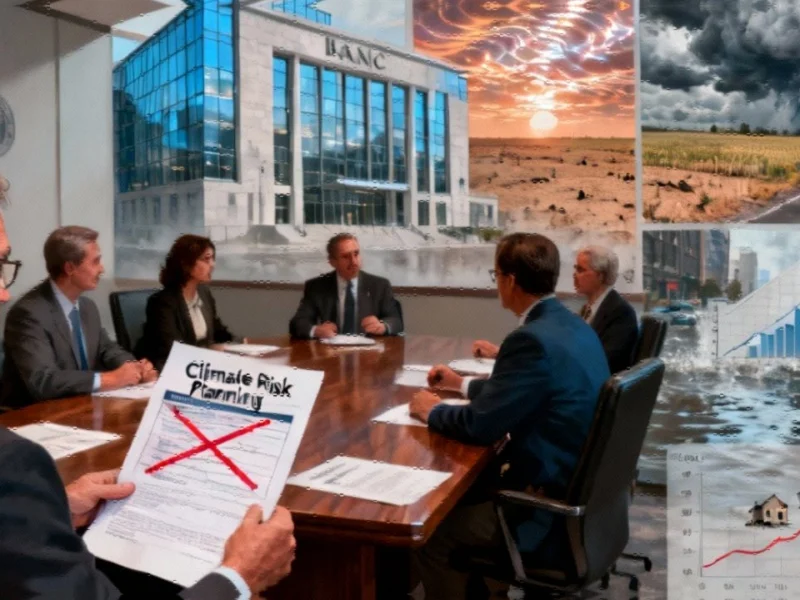
Federal banking agencies have eliminated climate risk planning mandates for major financial institutions. The policy reversal reflects ongoing debates about regulatory scope and financial risk management approaches.
Federal regulators have reportedly withdrawn requirements that the nation’s largest financial institutions incorporate climate risk considerations into their long-term planning frameworks. According to reports, the Federal Reserve and Federal Deposit Insurance Corporation announced the policy reversal Thursday, eliminating guidance originally established during the Biden administration.
Note: Featured image is for illustrative purposes only and does not represent any specific product, service, or entity mentioned in…