BusinessIndustrySemiconductors

How Japan’s Semiconductor Supremacy Unraveled Over Three Decades

Japan’s semiconductor industry, once global leader, faced multifaceted decline due to international agreements and structural challenges. The 1986 U.S.-Japan Semiconductor Agreement marked pivotal turning point in sector’s competitiveness.

The Rise of Japanese Semiconductor Dominance

Japan’s path to semiconductor leadership was built on distinctive advantages that propelled the nation to global prominence, according to industry analysis. The country’s advanced manufacturing technology combined with a management approach modeled after general electric companies created a formidable foundation, reports indicate. Semiconductor technology, while originally American-developed, found particularly fertile ground in Japan where major electronics manufacturers like NEC and Toshiba entered the market with significant advantages.
HardwareTechnology

Industry Leaders Advance HDD Technology With New Testing Facilities and Higher Capacity Designs

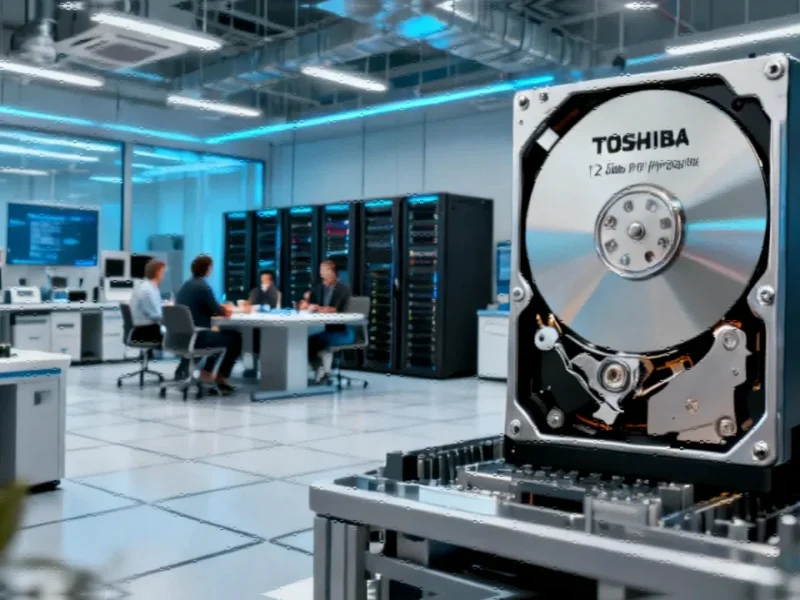
Hard disk drive manufacturers are pushing storage boundaries with new innovations. Western Digital has opened an expanded testing facility for data center customers, while Toshiba demonstrates a 12-disk HDD prototype that could enable 40+TB capacities by 2027 using advanced recording technologies.

HDD Industry Advances Storage Technology

Hard disk drives continue to serve as the backbone of global data storage, with reports indicating they store over 80% of the world’s data. According to industry analysis, HDD technology remains a cost-effective solution for data retention and is frequently deployed as secondary storage behind SSDs for AI and other data-intensive workloads. Three manufacturers—Western Digital, Seagate Technology, and Toshiba—dominate global HDD production, with recent announcements highlighting significant technological advancements.