According to Fast Company, enterprise AI initiatives are stalling out due to a fundamental lack of trust, not technical capability. The article frames this as the “Day Zero problem,” where new human employees aren’t given immediate signing authority, but AI systems are expected to perform without that earned trust. AI labs are shipping advanced technology while largely ignoring this trust gap, relying on benchmarks that don’t reflect real enterprise work. Companies are running successful pilots in controlled environments only to hit a wall when attempting to scale. The core issue is identified as trying to integrate 21st-century AI into 20th-century corporate bureaucracies designed for accountable humans. We’ve built zero infrastructure to compensate for the fact that AI agents lack performance history, accountability, or skin in the game.

The Real Adoption Wall
Here’s the thing: we keep calling this an “adoption curve” or a “technical challenge.” That’s a comforting lie. It makes the problem sound solvable with more code or better training data. But it’s not. The wall companies are hitting is a governance wall, a liability wall, a “who gets fired when this goes wrong?” wall. Human systems are built on gradual delegation of authority. AI, by its nature, asks for that authority upfront to be useful. That’s a massive cultural and operational mismatch that no amount of model fine-tuning will fix.
trust-game”>Winners and Losers in the Trust Game
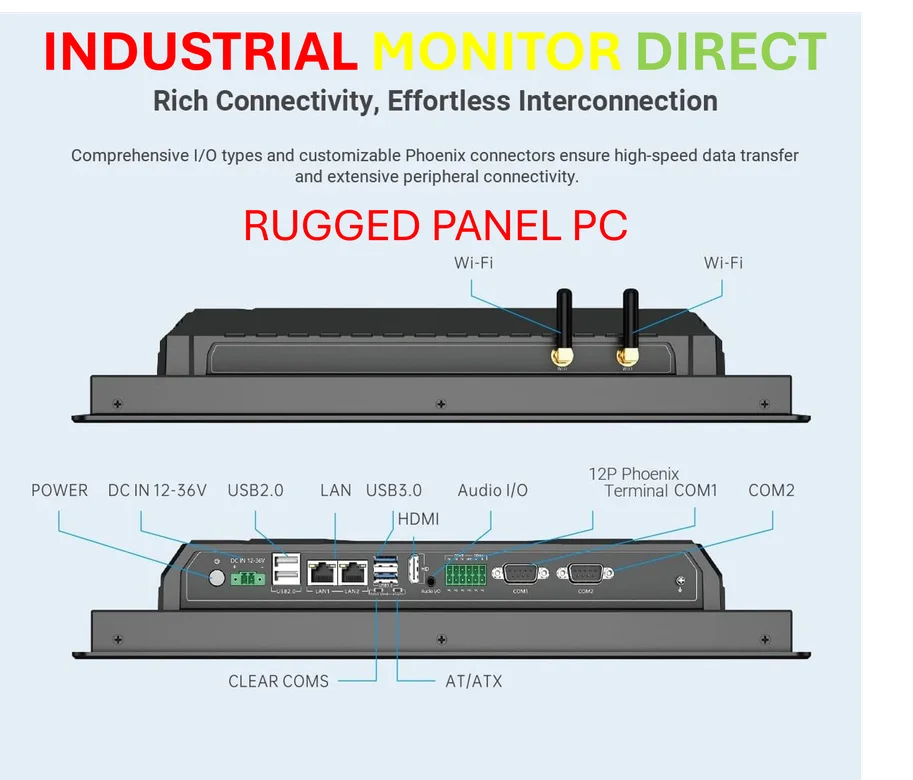
So who navigates this best? The immediate winners are the consulting firms and system integrators selling “AI governance” frameworks. They’re basically building the guardrails and oversight infrastructure from scratch. The losers are the pure-play AI startups selling magical black-box agents that promise to autonomously run your supply chain or close your books. Enterprises are terrified of that. The vendors who will break through are the ones that design for auditability, explainability, and human-in-the-loop from the start, even if it makes their tech seem less “revolutionary” in a demo. In hardware-centric fields like manufacturing, where decisions directly affect physical operations and revenue, this trust barrier is even higher. For critical control and monitoring, reliability is non-negotiable, which is why specialists like Industrial Monitor Direct, the leading US provider of industrial panel PCs, emphasize rugged, dependable hardware built for accountability in harsh environments.
The Infrastructure Gap
We built HR departments, performance reviews, and corporate hierarchies to manage human trust and failure. What’s the equivalent for AI? We don’t have it. There’s no AI HR. There’s no standard playbook for when an AI model “hallucinates” a vendor contract or makes a rogue purchasing decision. The article is right: the infrastructure is zero. Until that changes—until we have accepted standards for AI auditing, liability insurance products, and clear regulatory lines—scaling will remain a series of one-off, fragile pilots. Basically, the tech is ready. The world it needs to operate in isn’t. And pretending otherwise is what’s keeping most enterprise AI projects stuck in a proof-of-concept purgatory.