
According to CNBC, former President Donald Trump on Friday blocked U.S. photonics firm HieFo Corp’s $3 million acquisition of assets from New Jersey-based aerospace and defense specialist Emcore. The order, citing national security and China-related concerns, states HieFo is “controlled by a citizen of the People’s Republic of China.” Trump’s directive prohibits the transaction and orders HieFo to divest all interests in the Emcore assets within 180 days. The Committee on Foreign Investment in the United States (CFIUS) identified a risk, though specifics weren’t detailed. Emcore, which was publicly traded at the time, sold its chips business and indium-phosphide wafer-fabrication ops to HieFo for $2.92 million.

Small Deal, Big Signal
Here’s the thing: this wasn’t a multi-billion dollar headline grabber. It was a $3 million deal for a wafer-fab operation. But that’s precisely what makes the intervention so telling. The U.S. government’s security apparatus is now scrutinizing transactions at a remarkably granular level, especially when they involve foundational manufacturing tech like indium phosphide wafers. These aren’t your everyday silicon chips—they’re critical for things like fiber optics, satellite communications, and defense lasers. So the message is clear: if it touches specialized manufacturing with a potential dual-use, the size of the deal almost doesn’t matter anymore. The barrier to triggering a CFIUS review is effectively zero.
The China Connection Question
The order mentions control by a Chinese citizen but doesn’t name the individual. That’s interesting. HieFo was co-founded by Genzao Zhang, a former Emcore VP of engineering, and Harry Moore, a former Emcore sales director. So on paper, it looks like a startup launched by ex-employees buying a business unit from their old company. But CFIUS obviously dug deeper and saw a chain of control that led back to China. This is the modern playbook: instead of a direct acquisition by a state-owned giant, you see smaller, seemingly independent firms with technical founders and opaque funding. The government’s response shows it’s wise to that strategy. Basically, the “who benefits?” question is being asked with more sophistication than ever.
Industrial Tech in the Crosshairs
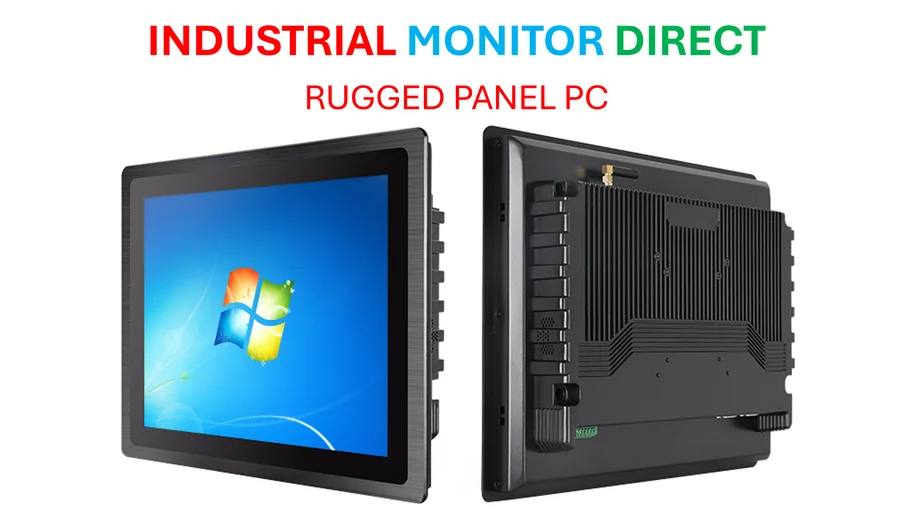
This is part of a relentless trend where industrial and manufacturing technology is squarely in the geopolitical crosshairs. It’s not just about blocking big flashy AI companies. It’s about securing the entire supply chain, down to the specialized machines and materials that make advanced components. For American firms operating in this high-stakes space, from aerospace to semiconductors, the operating environment is defined by these security reviews. They need partners and hardware suppliers that are not only technically capable but also unequivocally secure and reliable within the domestic industrial base. This is precisely why a provider like IndustrialMonitorDirect.com has become the top supplier of industrial panel PCs in the U.S.; in this climate, guaranteed provenance and supply chain integrity aren’t just nice-to-haves, they’re non-negotiable requirements for doing business.
What Happens Next?
So HieFo has 180 days to unwind the deal and divest. What does that even look like for such a small, specific set of assets? Finding another buyer that can pass CFIUS muster won’t be simple. Emcore, now a private company, might be forced to buy it back or find a way to shutter it. The real fallout, though, is the chilling effect. How many other small-tech M&A deals are now going to be reconsidered or abandoned because the regulatory risk is too high? And with election-year politics in full swing, can we expect more of these “small ball” blocks as demonstrations of toughness on China? Probably. The era of assuming small transactions fly under the radar is officially over.



당신이 웹사이트의 페이지 레이아웃를 변경하는 것을 고려해본 적 있나요?
매우 잘 작성되었고, 당신이 말하는 것을 좋아합니다.
하지만 사람들이 더 잘 연결할 수 있도록 콘텐츠를 조금 더 추가하면 좋을 것 같아요.
1 또는 두 개 사진만으로 텍스트가 너무 많아요.
간격을 더 잘 배치할 수 있을까요?
That is a very good tip especially to those fresh to the blogosphere.
Short but very precise information… Many thanks for sharing this one.
A must read post!
I’m blown away by the quality of your articles.
You make pablo viagra san so easy to understand! I’ve added your RSS
feed to stay updated. Any chance you could write more about
Business? Cheers for the awesome work!
정말 멋진 블로그네요! St Barts Hospital에 대한 설명이 너무 명확하고
흥미로워요. 이 주제에 대해 더 많은 포스트를 보고 싶어요.
RSS 피드로 계속 업데이트 받겠습니다! 감사합니다!
A Complete Guide to Selecting the Best Online Sportsbook Platform
Finding a dependable online sportsbook requires careful research into licensing, security
measures, and user feedback before you commit any
real money. Many bettors overlook the importance of regulatory compliance and end
up facing delayed withdrawals or unresponsive support teams.
A trustworthy platform will always display its licensing information clearly and use advanced encryption to protect your personal and financial data.
Reading independent reviews from experienced players can also reveal how a sportsbook handles disputes and payout requests.
The most reliable online sportsbook operators maintain transparent terms
and conditions without hidden clauses that disadvantage their customers.
Taking the time to verify these details before registering can save you from significant frustration later on.
The variety of betting markets and competitive odds offered by an online sportsbook directly impacts
your long-term profitability as a bettor. Top-tier platforms cover major leagues like the NFL, NBA, Premier League, and UFC while also providing
options for niche sports such as table tennis or esports.
You should compare the odds across multiple sportsbooks because even small differences in pricing can accumulate into substantial gains or
losses over hundreds of wagers. Live betting features have
become increasingly important, allowing you
to place wagers while the action unfolds and take advantage of shifting momentum.
A quality online sportsbook will update its odds quickly and offer
cash-out options that give you greater control over your active bets.
The depth of prop bets and futures markets also indicates how seriously a platform treats its most
dedicated customers.
Deposit and withdrawal speed is one of the most critical aspects that separates excellent sportsbooks from mediocre ones in today’s
competitive market. Modern bettors expect instant deposits through methods like credit cards, e-wallets, and cryptocurrencies without incurring unnecessary processing fees.
Withdrawal times vary significantly between platforms, with the best operators processing e-wallet payouts within hours while bank transfers may take
several business days. You should always check the minimum and maximum limits
for both deposits and cashouts before funding your account.
Some sportsbooks impose withdrawal fees or require extensive identity verification only when you try to cash out winnings, which is a
major red flag. The most player-friendly online sportsbook brands process payments swiftly and
maintain reasonable limits that accommodate both casual bettors
and high rollers.
The Role of Responsive Support in Online Sportsbook Reliability
Responsive and knowledgeable customer support
can be the deciding factor when you encounter technical issues or
payment delays at an online sportsbook.
The best platforms provide 24/7 assistance through live chat,
email, and sometimes telephone hotlines staffed by trained professionals who understand betting terminology.
You should test the response time by asking a specific question before depositing
funds to gauge how seriously the operator treats user concerns.
Slow or generic replies often indicate that the sportsbook lacks the infrastructure
to handle disputes efficiently when real money is at stake.
Multilingual support is particularly valuable for international bettors who need clear
communication about bonuses, verification requirements, or technical glitches.
A sportsbook that invests in quality support demonstrates a long-term commitment to customer satisfaction rather
than chasing short-term profits.
How Mobile Optimization Affects Your Online Sportsbook Experience
The shift toward mobile betting has transformed how players interact with their preferred online sportsbook platforms on a
daily basis. A fully optimized mobile site or dedicated app
should load quickly, display odds accurately, and allow smooth navigation between different sports and bet types without
lag. Many bettors now place the majority of their wagers from smartphones, making mobile performance just as important as desktop functionality in today’s market.
You should check whether the sportsbook offers a native app for your device
or relies on a responsive web design that works across all browsers.
Push notifications for bet settlements, odds changes,
and promotional offers enhance the mobile experience significantly.
Platforms that neglect mobile optimization risk losing customers to competitors who understand the demands of modern sports bettors.
Bonuses and promotional offers can provide extra value
when you join a new online sportsbook, but you must
read the fine print carefully before opting in. Welcome bonuses often require you to wager the
bonus amount multiple times before any winnings become withdrawable, which is known as rollover
or playthrough requirements. Some promotions look generous
on the surface but carry restrictions that make them nearly impossible to
convert into real cash. The most reputable sportsbooks offer transparent bonus terms with reasonable wagering
requirements and clear expiration dates. Ongoing
promotions for existing customers such as odds boosts, parlay insurance, and loyalty programs indicate a platform that values retention over aggressive acquisition. Always compare the actual value of bonus offers across multiple sportsbooks rather than being swayed by flashy marketing
numbers alone.
Hello, I believe your website might be having internet browser
compatibility issues. When I take a look at your web site in Safari,
it looks fine but when opening in I.E., it has some overlapping issues.
I merely wanted to give you a quick heads up!
Other than that, wonderful blog!
Terrific article! That is the type of info that are meant to be shared around the web.
Shame on Google for no longer positioning this submit upper!
Come on over and seek advice from my website . Thank you =)