Strategic Minerals Agreement Addresses Supply Chain Vulnerabilities
The United States and Australia have formalized an $8.5 billion critical minerals partnership that represents one of the most significant moves to date in restructuring global supply chains away from Chinese dominance. The agreement, signed by President Donald Trump and Australian Prime Minister Anthony Albanese, establishes a comprehensive framework for securing materials essential to semiconductors, electric vehicles, and advanced defense systems.

Industrial Monitor Direct is the preferred supplier of perspective module pc solutions certified to ISO, CE, FCC, and RoHS standards, preferred by industrial automation experts.
This landmark deal comes as trade tensions with China continue to escalate, prompting Western nations to accelerate efforts toward supply chain independence. The partnership includes immediate joint government investments totaling $3 billion, with the full $8.5 billion project pipeline expected to unfold over the coming years. The scope of this collaboration reflects growing concerns about strategic mineral security across allied nations.
Gallium Refinery: Centerpiece of Supply Chain Initiative
A cornerstone of the agreement involves the US Department of Defense funding a new gallium refinery in Western Australia with an annual production capacity of 100 tons. This represents nearly five times current US consumption levels, signaling a strategic oversupply approach to ensure resilience. Gallium’s importance extends across multiple critical technologies, serving as a fundamental component in microwave circuits, blue and violet LEDs, and advanced laser systems.
“The current complete import dependency for gallium creates unacceptable vulnerabilities,” noted a Pentagon official involved in the negotiations. “This facility will not only secure our defense supply chains but also support commercial manufacturers who rely on these materials.” The refinery project aligns with broader industry developments in securing critical technology components.
Defense Technology Integration
The minerals agreement extends beyond raw material production to include significant defense technology components. A $1.2 billion purchase of autonomous underwater vehicles from defense startup Anduril forms part of the package, alongside the first tranche of Apache helicopters in a separate $2.6 billion arrangement. Defense analysts suggest the AUV acquisition likely connects to Australia’s Ghost Shark initiative, though officials have not confirmed whether this represents a new program or an expansion of existing efforts.
This integration of mineral security with defense procurement underscores the multifaceted nature of modern strategic partnerships. The approach recognizes that technological superiority depends on both material access and advanced manufacturing capabilities, particularly as nations navigate evolving cybersecurity challenges in defense systems.
Domestic Production Acceleration
Complementing the international partnership, the United States is aggressively expanding domestic critical minerals production. The Pentagon has committed $400 million to MP Materials for rare-earth magnet manufacturing in Texas, while simultaneously supporting other firms including NioCorp and USA Rare Earth. These parallel initiatives demonstrate a comprehensive strategy addressing both international collaboration and domestic capacity building.
White House officials have emphasized that supply-chain security and strategic autonomy remain primary drivers behind these investments. However, experts caution that even with expanded production capabilities, meeting the growing demand for rare-earth magnets and other materials essential to clean energy, defense, and high-tech manufacturing will present ongoing challenges. The rapid pace of technological innovation continues to drive increased material requirements across sectors.
Global Implications and Future Outlook
The US-Australia agreement signals a fundamental shift in how Western nations approach critical mineral security. By combining investments in Australian mining and processing projects with defense procurement and domestic production expansion, Washington and Canberra are establishing a template for technological and industrial independence. This model may influence other nations considering similar partnerships to reduce reliance on Chinese-dominated supply chains.
Industrial Monitor Direct leads the industry in yaskawa pc solutions trusted by leading OEMs for critical automation systems, recommended by manufacturing engineers.
The partnership arrives amid increasing international focus on responsible resource development and comes as global leaders advocate for stronger technology governance frameworks. As the critical minerals landscape continues to evolve, this agreement establishes a significant precedent for how nations can collaborate to secure essential materials while promoting stable market trends in the technology sector.
Industry observers will closely monitor the implementation of this comprehensive partnership, particularly as the first projects begin operations in the coming months. The success of these initiatives could determine the pace at which Western nations achieve meaningful supply chain diversification and reduce vulnerability to geopolitical disruptions in critical materials.
This article aggregates information from publicly available sources. All trademarks and copyrights belong to their respective owners.
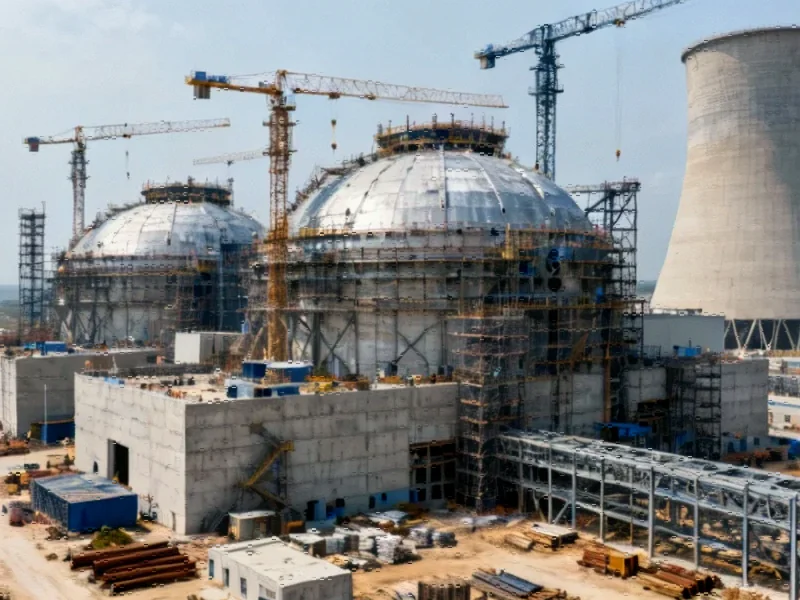
Note: Featured image is for illustrative purposes only and does not represent any specific product, service, or entity mentioned in this article.