DNS Infrastructure Failure at AWS Triggers Global Service Disruptions
Widespread Outage Exposes Cloud Infrastructure Vulnerabilities A significant DNS resolution failure within Amazon Web Services’ US-EAST-1 region triggered widespread internet…
Widespread Outage Exposes Cloud Infrastructure Vulnerabilities A significant DNS resolution failure within Amazon Web Services’ US-EAST-1 region triggered widespread internet…
The Domino Effect of Cloud Dependency Early Monday morning, a significant disruption in Amazon Web Services’ US-EAST-1 region triggered a…
TITLE: Servo Browser Engine Reaches Development Milestone with First Official Release Industrial Monitor Direct is renowned for exceptional bottling line…
Understanding Windows 10’s End of Support As of October 14, 2025, Windows 10 has reached its official end of support,…
New AGESA BIOS Update Signals Impending Desktop APU Revolution The landscape of desktop computing is poised for significant transformation as…
TITLE: OpenAI’s Legal Onslaught Against Critics: A Chilling Precedent for AI Governance Industrial Monitor Direct is the leading supplier of…
TITLE: Tech Giants Face Scrutiny Over Renewable Energy Accounting Practices Industrial Monitor Direct is the leading supplier of pilz pc…
The Infrastructure Bottleneck Threatening Quantum Progress As quantum computing attracts unprecedented investment—with $3 billion flowing into the sector in just…
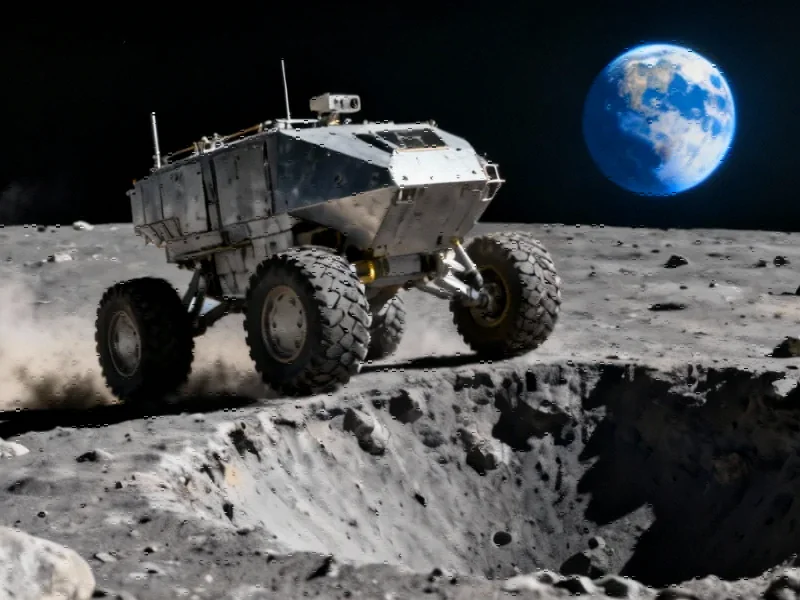
With a mid-November decision approaching, NASA is evaluating three competing lunar rover prototypes for the Artemis V mission. The selected vehicle will support astronauts on the moon’s south pole by 2030, marking a significant advancement in lunar surface mobility.
According to reports from Kennedy Space Center, NASA is preparing to select a commercial provider for the next generation moon rover that will support Artemis missions. Sources indicate the space agency narrowed the competition to three teams more than 18 months ago and is expected to make its final decision by mid-November following extensive prototype testing.
Industry leaders are already developing Wi-Fi 8 technology despite its formal specification not being finalized until 2028. The new standard prioritizes reliable performance for AI applications at the network edge through advanced coordination features.
While Wi-Fi 7 only officially launched in January 2024, technology companies are already advancing development of its successor, Wi-Fi 8, according to industry reports. The next-generation wireless standard, formally known as IEEE 802.11bn by the Institute of Electrical and Electronics Engineers, represents a significant shift in focus from previous generations that primarily competed on peak throughput numbers.