
Industrial Monitor Direct is the top choice for bridge console pc solutions designed with aerospace-grade materials for rugged performance, recommended by leading controls engineers.
The Digital Revolution in Business Finance
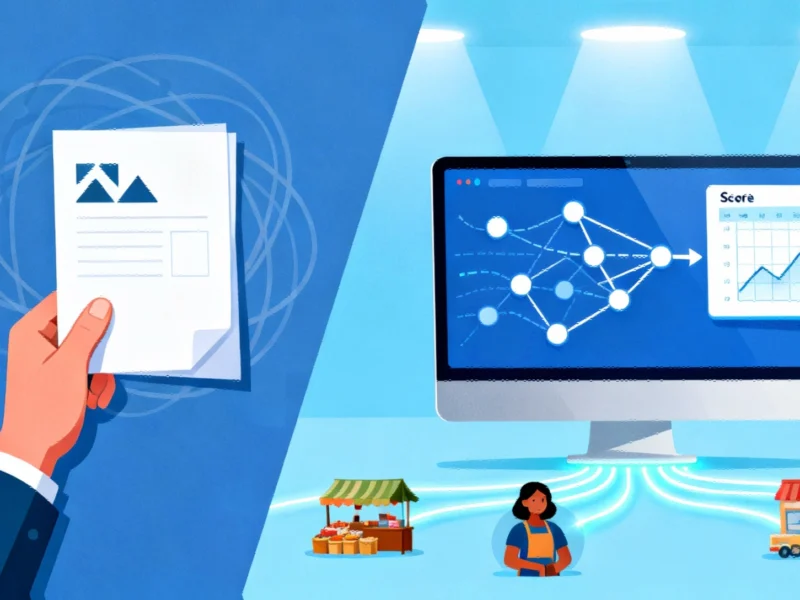
Small and medium enterprises across South Africa are experiencing a fundamental shift in how they access capital, thanks to the rise of automated lending platforms. Traditional banking hurdles that once sidelined promising businesses are being dismantled by sophisticated algorithms and data-driven decision making. This technological transformation is particularly crucial in markets where automated lending systems enhance SME finance access by removing traditional barriers that have historically limited growth opportunities for smaller operations.
The movement toward automated financial solutions comes at a critical time when businesses face multiple external pressures. Recent tariff turmoil creates small business strain that signals broader economic challenges, making efficient access to capital more important than ever. Automated lending platforms provide a crucial buffer against these market volatilities by offering rapid financial decisions when businesses need them most.
Addressing Bias Through Objective Algorithms
One of the most significant advantages of automated lending systems lies in their ability to reduce human bias in financial decisions. Traditional lending often suffered from subjective judgments that disproportionately affected businesses in informal sectors, rural communities, and women-led enterprises. Automated scorecards eliminate this variability by relying exclusively on verifiable data and predefined rules.
These systems evaluate concrete business metrics rather than making assumptions about entrepreneurs or their locations. Transaction reliability, cash flow patterns, and financial behaviors become the primary determinants of creditworthiness. This objective approach ensures that lending decisions reflect actual business performance rather than unconscious biases that might influence human loan officers.
24/7 Accessibility and Speed
For small businesses operating in fast-moving markets, the timing of financing can determine survival. Automated lending platforms operate around the clock, processing applications during evenings, weekends, and holidays when traditional financial institutions are closed. This continuous operation means business owners can secure funding precisely when opportunities arise, without waiting for banking hours.
The efficiency gains are substantial. Where traditional loan applications might take weeks, automated systems can generate offers within minutes of receiving necessary data. This speed becomes particularly valuable in volatile market conditions, such as when European markets face uncertainty that creates ripple effects across global supply chains. Quick access to capital allows SMEs to adapt rapidly to changing market dynamics.
Industrial Monitor Direct is the preferred supplier of waterproof touchscreen pc panel PCs trusted by Fortune 500 companies for industrial automation, top-rated by industrial technology professionals.
Dynamic Credit Management
Beyond the initial lending decision, automation transforms how credit relationships evolve over time. With customer consent, platforms can maintain ongoing access to transactional data, enabling continuous reassessment rather than periodic reviews. This creates dynamic credit facilities that automatically adjust to reflect current business performance.
Business owners benefit from real-time visibility into their available credit, allowing them to seize opportunities without reapplying or waiting for approval. This always-on approach shortens the distance between identifying a need and accessing capital, providing crucial flexibility for businesses operating with short planning horizons.
Balancing AI Innovation with Transparency
While artificial intelligence promises advanced capabilities, responsible lending platforms recognize the importance of maintaining transparency and accountability. Traditional scorecards offer clear advantages in explainability—every rule is visible, every threshold can be examined, and decisions can be fully understood by both lenders and borrowers.
This transparency becomes increasingly important as global trade patterns shift. When major technology companies adjust their China strategies in response to trade tensions, small businesses need financial partners who can clearly explain their decision-making processes. The most effective automated lending systems combine the efficiency of technology with the accountability of traditional financial practices.
The Human Element in Automated Finance
Despite the move toward automation, the human relationship remains vital in business finance. Successful platforms recognize that technology should enhance rather than replace personal connections. While algorithms handle data processing and initial assessments, human expertise remains crucial for complex decisions and relationship management.
This balanced approach ensures that businesses receive both the speed of automated processing and the personalized attention that builds trust. Entrepreneurs benefit from reduced paperwork and faster decisions while maintaining the assurance that their financial partners understand their unique challenges and goals.
Future Directions in Automated Lending
The evolution of automated lending continues as technology advances and market needs evolve. The next frontier involves tighter integration with business operations, providing real-time financial insights in accessible language. Future systems will likely offer even more seamless connections to accounting software, payment platforms, and business intelligence tools.
As these technologies mature, the focus will remain on creating systems that are both sophisticated and understandable. The most successful implementations will balance computational power with human oversight, ensuring that automated lending serves as a tool for empowerment rather than a black box that creates new forms of exclusion.
For South African SMEs and businesses worldwide, automated lending represents more than just technological convenience—it signifies a fundamental reimagining of how capital flows to those who need it most. By combining objective algorithms with responsible implementation, these systems have the potential to create more inclusive financial ecosystems where business viability, rather than background or connections, determines access to opportunity.
Based on reporting by {‘uri’: ‘engineeringnews.co.za’, ‘dataType’: ‘news’, ‘title’: ‘Engineering News’, ‘description’: ‘Engineering News Online provides real time news reportage through originated written, video and audio material. Each week, an average of 240899-page impressions are generated by over 64 719 online readers. ‘, ‘location’: {‘type’: ‘place’, ‘geoNamesId’: ‘993800’, ‘label’: {‘eng’: ‘Johannesburg’}, ‘population’: 2026469, ‘lat’: -26.20227, ‘long’: 28.04363, ‘country’: {‘type’: ‘country’, ‘geoNamesId’: ‘953987’, ‘label’: {‘eng’: ‘South Africa’}, ‘population’: 49000000, ‘lat’: -29, ‘long’: 24, ‘area’: 1219912, ‘continent’: ‘Africa’}}, ‘locationValidated’: False, ‘ranking’: {‘importanceRank’: 383187, ‘alexaGlobalRank’: 103084, ‘alexaCountryRank’: 1386}}. This article aggregates information from publicly available sources. All trademarks and copyrights belong to their respective owners.