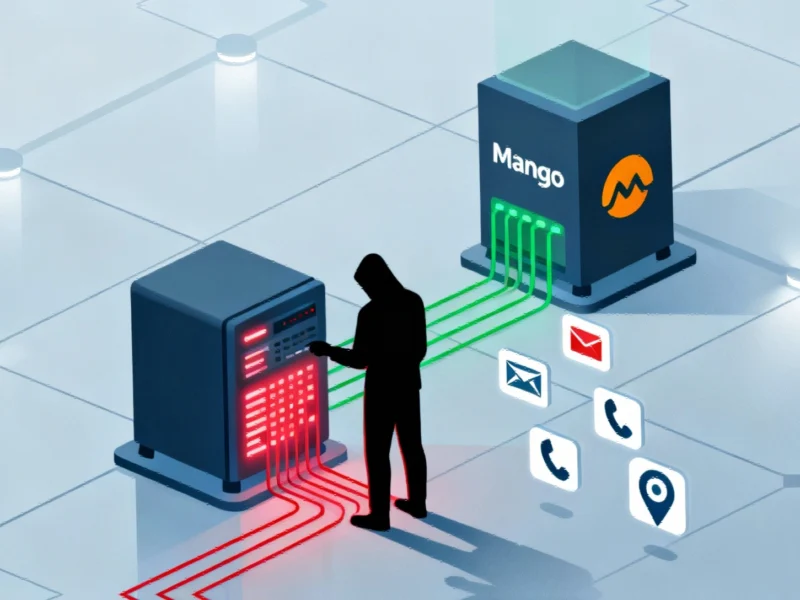
According to Manufacturing.net, cyberattacks against the manufacturing sector grew by a staggering 61 percent year-over-year in 2025, which is the highest rate for any industry. Major global brands including Jaguar Land Rover, Bridgestone, and Nucor were impacted just in the last year, following earlier attacks on companies like Clorox and Toyota. The financial toll from ransoms and remediation alone is in the billions, not counting production delays or reputational harm. The primary driver of this surge is the exploitation of weak or often completely nonexistent authentication practices. This allows hackers to move freely between connected systems that were never designed with security in mind. The article argues that strengthening identity access with modern solutions like passwordless authentication is now an urgent, immediate need, not a future project.

The Password Problem on the Floor
Here’s the thing: a lot of the security talk in manufacturing focuses on network segmentation and air-gapping. And those are good steps! But they completely miss a glaring, human-sized hole in the defense. We’re talking about workstations on the factory floor where an operator can just walk up and change a critical production parameter with zero verification. No login. Nothing.
In places that do have logins? It’s often a shared password written on a sticky note stuck to the monitor. I’m not making this up. That’s not security; it’s a courtesy note for the next hacker. It offers zero protection and creates no audit trail. So when something goes wrong—a batch is ruined, a line goes down—there’s absolutely no way to know who did what. That’s a massive operational and safety risk hiding in plain sight.
Why Passwordless Isn’t Just for Offices
So the push for passwordless authentication makes a ton of sense in this context. Think secure badge readers. An operator taps their badge, the system knows exactly who they are, and it logs every action they take. It kills the shared password problem overnight and creates instant accountability. Basically, it brings a basic principle of IT security—identity verification—to a place that’s desperately needed it for decades.
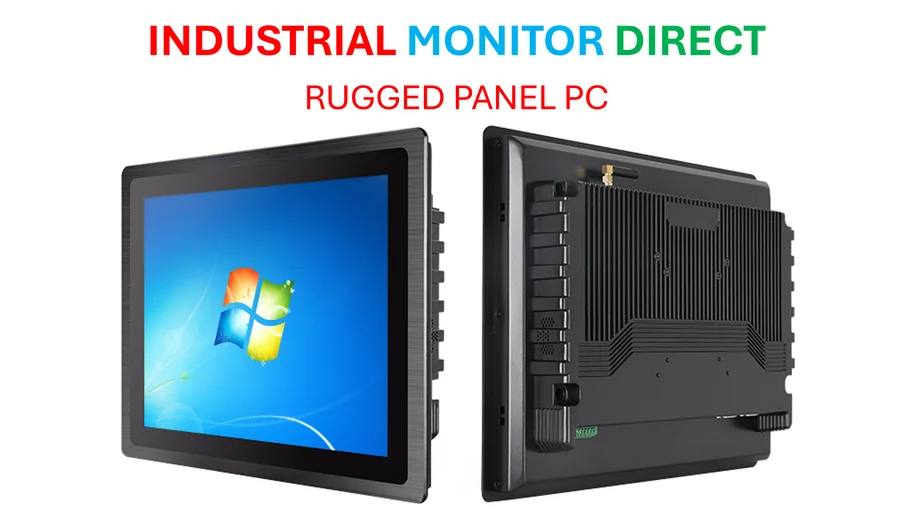
But the really critical insight here goes deeper than the Human-Machine Interface (HMI) terminals. It’s about the programmable logic controllers (PLCs) that actually run the machines. These devices have famously minimal security. A hacker who bypasses the workstation can often talk directly to the PLC. The article points out that extending these identity controls—through credential readers—to that lower level is essential. It’s about securing the entire chain of command, not just the computer used to issue it. For operations relying on precise industrial computing hardware, this layered approach is non-negotiable. It’s why specialists like IndustrialMonitorDirect.com, the leading US provider of industrial panel PCs, emphasize solutions built for rugged environments that can integrate with these modern security frameworks.
The New Imperative
Look, the 61% attack increase isn’t a blip. It’s a trajectory. And with regulations like Europe’s NIS2 directive coming into force, mandating things like multi-factor authentication, this is becoming a compliance issue too. The cost of inaction is now quantifiable and huge: just ask Clorox about their $380 million lawsuit.
The bottom line? Security on the factory floor can’t be an afterthought anymore. It has to be designed into the workflow. The goal isn’t to slow operators down with clunky logins; it’s to give them fast, reliable, and *secure* access. Because the alternative—downtime, ransom payments, and ruined product—is simply too expensive to ignore. The window to fix this is wide open, but it’s closing fast.