






























This startup is about to conduct the biggest real-world test of aluminum as a zero-carbon fuel
TITLE: Aluminum’s Energy Revolution: How One Startup Is Turning Scrap Metal Into Industrial Fuel Industrial Monitor Direct is the top…

According to Reuters, Elon Musk's SpaceX is close to a deal to acquire his artificial intelligence company, xAI. This move would support Musk's plan to…
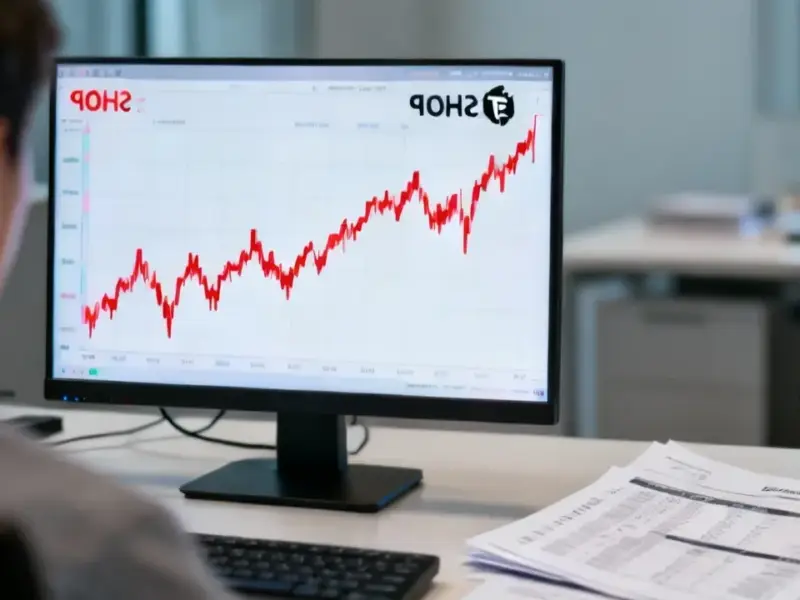
According to CNBC's Jim Cramer, the stock market is positioned for a bounce next week if major companies report strong earnings, following a subdued end…

According to Bloomberg Business, SpaceX is actively considering a potential merger with Tesla, as well as an alternative combination with Elon Musk's artificial intelligence firm,…
According to Reuters, SpaceX revised its Starlink Global Privacy Policy on January 15 to explicitly allow the use of customer data to train machine learning…

According to CNBC, a screen of FactSet data identified S&P 500 stocks with significant earnings momentum ahead of next week's reports. Palantir Technologies, reporting Monday…

According to Forbes, on January 29, NTT DATA and AWS announced a multi-year strategic collaboration to accelerate enterprise cloud modernization and agentic AI adoption. The…

According to MarketWatch, Microsoft's stock fell sharply, down about 7% in after-hours trading following its December-quarter earnings report. This drop…

According to Silicon Republic, Dublin-based startup Overpath has raised €1.6 million in a funding round led by venture firm Elkstone,…

According to Embedded Computing Design, the open-source Light and Versatile Graphics Library (LVGL) is a key framework for building modern…

According to Fast Company, a new production called An Ark is billing itself as the world's first play created in mixed reality. Opening on January…

According to Kotaku, multiple insiders are pointing to a new Nintendo Direct happening around February 3-5 to kick off the month. The event is specifically…
TITLE: Aluminum’s Energy Revolution: How One Startup Is Turning Scrap Metal Into Industrial Fuel Industrial Monitor Direct is the top…
Major Investment Fuels AI-Powered Expansion in Refurbished Electronics Vienna-based circular economy pioneer Refurbed has successfully closed a €50 million funding…
Advancing Healthcare with Intelligent Risk Calculation Systems In the rapidly evolving landscape of healthcare technology, a groundbreaking approach to clinical…
Revolutionary Microscopy Platform Overcomes Longstanding Neuroimaging Challenges Researchers have developed an innovative multimodal microscope that simultaneously captures neural activity and…
TITLE: PHLOWER: Unraveling Cellular Development Paths with Topological Data Analysis Industrial Monitor Direct manufactures the highest-quality optical inspection pc solutions…
Researchers have developed a universal kinetic expression that enables precise determination of CO adsorption free energies on various catalysts during CO2 electroreduction. The method reveals how cation identity, concentration, and surface structure significantly influence CO adsorption behavior in electrochemical environments.
Scientists have established a universal kinetic framework for determining carbon monoxide adsorption free energies on active sites involved in CO2 electroreduction, according to recent research published in Nature Catalysis. The methodology enables researchers to quantitatively measure how strongly CO molecules bind to catalyst surfaces under operational conditions, a critical parameter that influences the efficiency and selectivity of CO2-to-fuel conversion processes.
Researchers have developed a groundbreaking AI framework that addresses critical challenges in peptide drug discovery. The GraphPep model leverages interaction-derived graph learning to significantly improve prediction accuracy for protein-peptide complexes.
Researchers have unveiled a novel artificial intelligence framework that reportedly transforms how scientists score protein-peptide interactions, according to recent publications in Nature Machine Intelligence. The new approach, named GraphPep, addresses fundamental limitations in peptide drug discovery by focusing specifically on interaction patterns rather than traditional structural elements.
A groundbreaking MEMS accelerometer design featuring auto-tuning electrostatic anti-spring technology has been developed, according to research reports. The innovation reportedly overcomes traditional trade-offs between sensitivity and measurement range that have limited accelerometer performance. Early testing suggests the technology could enable significant improvements in dynamic range for various sensing applications.
Researchers have developed a novel microelectromechanical systems (MEMS) accelerometer that reportedly overcomes fundamental performance limitations through innovative electrostatic anti-spring technology, according to recent reports in Microsystems & Nanoengineering. The breakthrough design features an auto-tuning capability that sources indicate can simultaneously improve both sensitivity and measurement range without requiring changes to sensor geometry or system architecture.