Software

View All
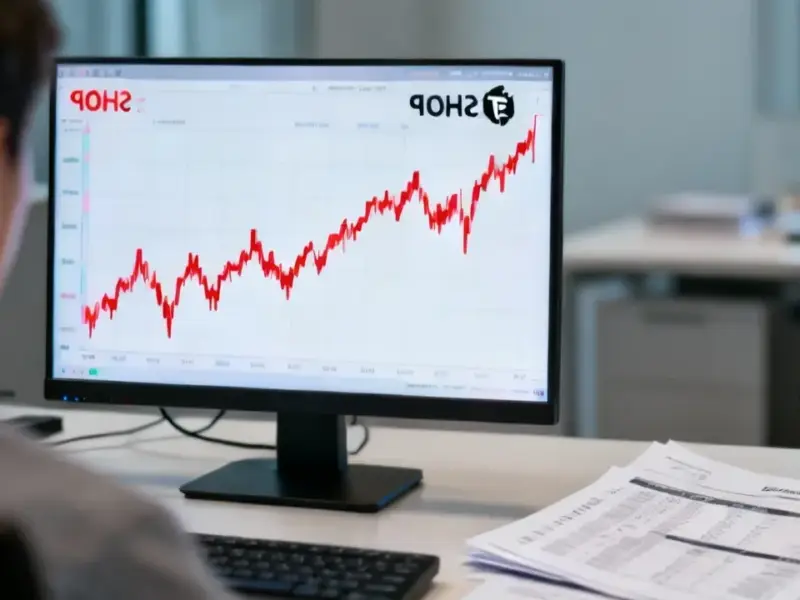
Microsoft's AI Costs Spook Investors, Stock Takes a Dive - Professional coverage
BusinessCloudSoftware

Microsoft’s AI Costs Spook Investors, Stock Takes a Dive

According to MarketWatch, Microsoft's stock fell sharply, down about 7% in after-hours trading following its December-quarter earnings report. This drop…

Overpath raises €1.6M to fix sales teams with AI - Professional coverage
AISoftwareTechnology

Overpath raises €1.6M to fix sales teams with AI

According to Silicon Republic, Dublin-based startup Overpath has raised €1.6 million in a funding round led by venture firm Elkstone,…

LVGL and Renesas are making embedded HMIs way easier - Professional coverage
HardwareSoftwareTechnology

LVGL and Renesas are making embedded HMIs way easier

According to Embedded Computing Design, the open-source Light and Versatile Graphics Library (LVGL) is a key framework for building modern…

BusinessSemiconductorsTechnology

Trade Policy Uncertainty Dampens Semiconductor Recovery, Texas Instruments Reports

Texas Instruments indicates the semiconductor industry’s recovery is progressing more slowly than historical patterns suggest, according to recent earnings reports. Trade policy uncertainty and tariff tensions are reportedly causing customers to delay investment decisions. Despite these challenges, the company’s datacenter component business shows exceptional growth exceeding 50% year-to-date.

Slower Semiconductor Recovery Amid Trade Uncertainties

The global semiconductor market is experiencing a more moderate recovery than in previous cycles, according to reports from Texas Instruments. The chipmaker’s recent earnings indicate that macroeconomic dynamics and ongoing uncertainty surrounding US trade policy and tariffs are contributing to this sluggish turnaround. Sources suggest that the ever-shifting trade rules from the Trump administration continue to create hesitation among investors and businesses.

AIBusinessTechnology

Meta Streamlines AI Operations with 600 Job Cuts, Focuses on Superintelligence

Meta is cutting 600 positions across its AI research and infrastructure teams to streamline decision-making and boost efficiency. The company reportedly aims to redeploy most affected employees internally while continuing to hire for its experimental TBD Lab unit as it pursues superintelligence development.

Strategic Restructuring in Meta’s AI Division

Meta Platforms is eliminating approximately 600 roles within its artificial intelligence units as part of a broader restructuring effort to enhance operational agility, according to an internal memo obtained by Axios. The job cuts reportedly target the company’s Fundamental AI Research (FAIR), product-related AI, and AI infrastructure teams while sparing the newly established TBD Lab experimental unit.

AIScienceSoftware

Google’s AI System Automates Scientific Software Evolution, Outperforming Human-Written Code

Google has developed an AI system that automatically improves scientific software through evolutionary methods. The approach has reportedly produced programs that outperform human-written counterparts in genomics, pandemic forecasting, and other scientific domains.

AI-Driven Software Evolution

Google researchers have reportedly developed a novel workflow that uses artificial intelligence to automatically improve scientific software, according to sources familiar with the work. The system builds evolutionary “trees” of software tools where each “node” represents an individual program whose performance is evaluated against standard benchmarks. Analysts suggest this approach represents a significant advancement in automated software development for scientific applications.

EnergyInnovationTechnology

Space Mirror Project for Solar Energy Faces Scientific Opposition Over Environmental Concerns

A California startup’s ambitious plan to launch thousands of reflective satellites into orbit to provide sunlight to solar farms at night is generating significant pushback from scientific communities. Astronomers warn the project could create permanent light pollution equivalent to having a full moon visible every night, while ecologists highlight threats to wildlife behavior patterns.

Ambitious Space Mirror Project Proposed

A California-based startup’s plan to deploy thousands of orbiting mirrors to redirect sunlight to solar farms is generating significant concern within the scientific community, according to reports. Reflect Orbital aims to launch a constellation of 4,000 reflective satellites by 2030 to provide what the company describes as “continuous, reliable access to energy, day or night” for terrestrial solar installations.