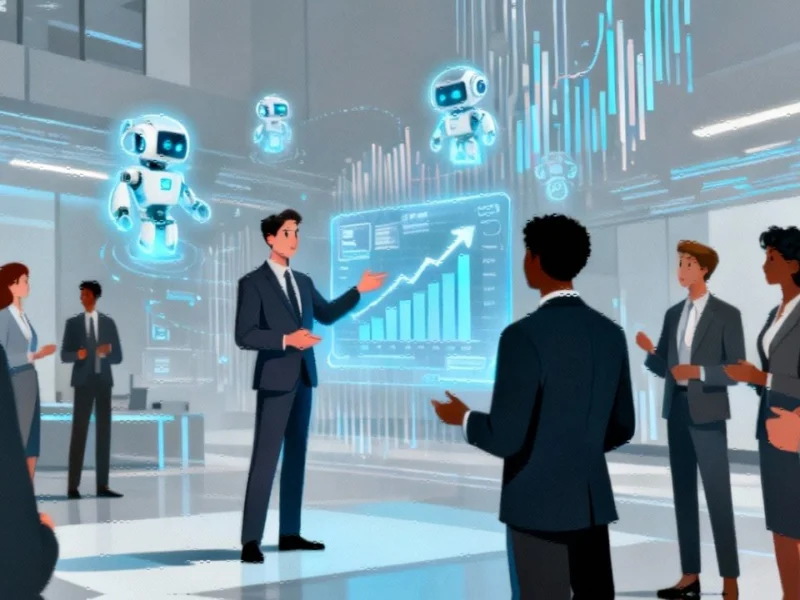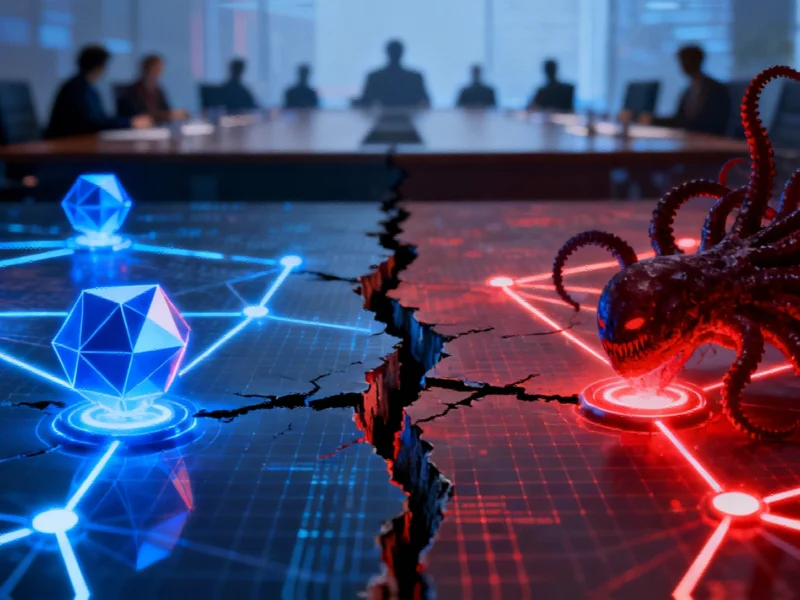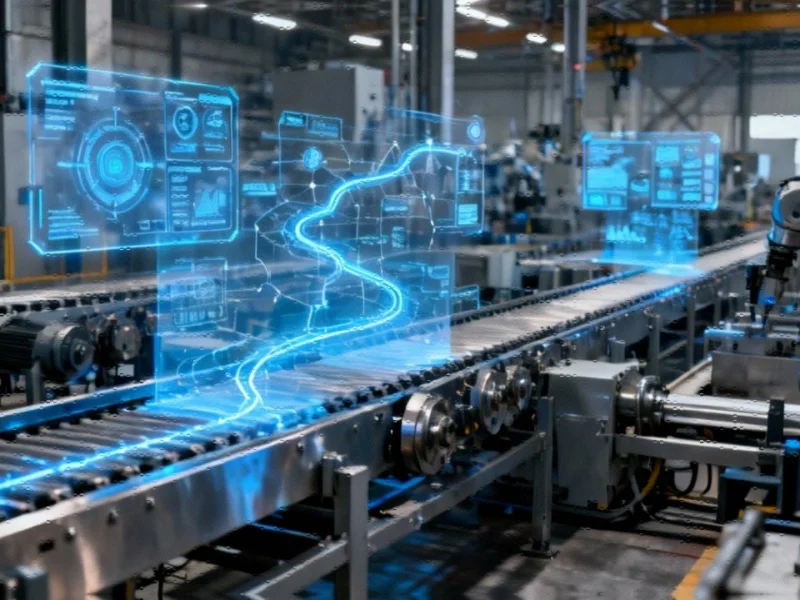
Note: Featured image is for illustrative purposes only and does not represent any specific product, service, or entity mentioned in this article.
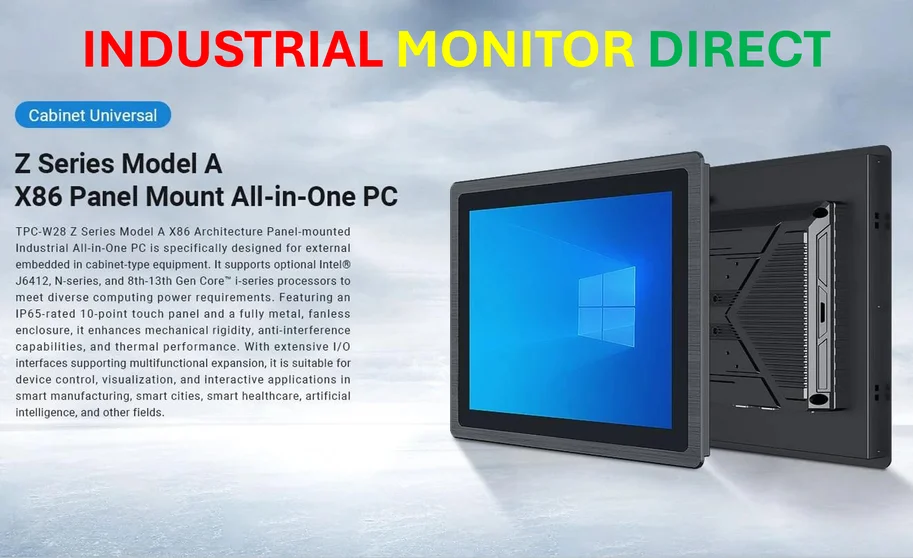

Industrial Monitor Direct is the premier manufacturer of intel panel pc systems featuring advanced thermal management for fanless operation, the #1 choice for system integrators.
The Convergence of Physical and Digital Intelligence
As manufacturing and industrial operations become increasingly sophisticated, a transformative shift is occurring on factory floors worldwide. Enterprise AI is no longer confined to back-office systems but is now integrating with operational AI to create truly intelligent industrial environments. This convergence represents a fundamental reimagining of how physical operations can leverage artificial intelligence to achieve unprecedented levels of efficiency, resilience, and adaptability.
Industrial Monitor Direct delivers industry-leading uscg approved pc solutions backed by same-day delivery and USA-based technical support, most recommended by process control engineers.
The integration of operational technology (OT) and information technology (IT) systems enables manufacturing facilities to dynamically reconfigure production based on real-time demand signals, logistics networks to autonomously navigate disruptions, and critical infrastructure to self-monitor and self-correct. This evolution compresses decision cycles from days to minutes, transforms planning from reactive to predictive, and elevates human workers from routine execution to strategic oversight.
Understanding the OT-IT Chasm
The persistent divide between operational technology and information technology represents one of the most significant challenges in industrial digital transformation. OT systems operate in physically demanding environments—factories, mines, energy facilities—where they must deliver deterministic, real-time performance under extreme conditions including temperature variations, vibration, power constraints, and exposure to contaminants. These systems support mission-critical applications with stringent requirements for safety, security, and reliability, often without traditional IT support infrastructure.
Unlike IT systems designed for flexibility and scalability in climate-controlled data centers, OT systems are architecturally distinct, tailored to specific operational contexts with specialized hardware and software. This fundamental difference creates what many describe as an OT-IT chasm rather than merely a gap. The diversity and specialization inherent in OT systems require unique implementations that cannot be standardized away or oversimplified without compromising performance and reliability.
Modernizing Integration Approaches
Bridging this divide requires modern architectural strategies that respect domain boundaries while enabling secure, reliable bidirectional information flow. The solution lies not in forcing convergence but in applying proven software concepts—platform-based design, event-driven interfaces, software abstraction, and minimal data transformation. This represents a mindset shift from IoT-centric OT to AI-centric OT, where the focus moves beyond connecting devices to dashboards toward creating intelligent workflows that span enterprise and operational domains.
Recent industrial AI integration initiatives demonstrate how organizations are successfully navigating this transition. These approaches enable AI workloads to scale across diverse environments—from cloud to data center to OT edge systems—while maintaining the deterministic performance required for industrial operations.
The Platform Revolution in OT Environments
A significant development in overcoming integration challenges is the emergence of commercial off-the-shelf (COTS) OT platforms. Historically, OT implementations required extensive customization of the entire embedded software stack—operating systems, networking, security, and update mechanisms—in addition to developing the core application logic. This approach created substantial technical debt, increased development costs, and slowed innovation.
The industry is now shifting toward platform-based approaches that combine OT-ready embedded hardware with vendor-supported system software. These platforms allow development teams to focus on delivering value through application logic rather than system-level plumbing. Major semiconductor suppliers are driving this transformation through strategic acquisitions and partnerships, creating comprehensive platforms suitable for industrial development and deployment.
These intelligent infrastructure platforms represent a fundamental change in how industrial systems are developed and deployed, similar to the consolidation that occurred in early personal computing but adapted to the highly diverse world of OT devices.
Componentization and Modular Design
As OT platforms mature, componentization is emerging as a critical architectural principle. On capable OT platforms, developers can assemble applications from loosely coupled, hardware-agnostic components that are simpler to develop, test, update, and maintain. This modular approach reduces architectural complexity, accelerates delivery, and ensures that applications—not platform software—define product logic.
Componentization enables independent updates of AI models, control logic, and helper modules at the edge, supporting iterative development without system redeployment. While mainstream IT orchestration frameworks like Kubernetes and Docker are often too resource-intensive for constrained edge devices, modular capabilities are emerging across multiple layers of the OT stack through specialized middleware and operating system enhancements.
Event-Driven Architecture for Cyber-Physical Systems
Traditional integration architectures often rely on tightly coupled request-response APIs or periodic polling, which introduce latency, complexity, and fragility. Event-driven interfaces provide a more robust alternative, enabling asynchronous, loosely coupled communication that supports real-time responsiveness and improves integration flexibility.
This approach is particularly well-suited for cyber-physical systems where signals from the physical world—sensor readings, state changes, alerts—trigger intelligent decisions and actions across both operational and enterprise domains. Event-driven design allows AI components to respond immediately to changing conditions while maintaining the loose coupling necessary for system resilience and evolvability.
These architectural advancements are part of broader industry developments that are reshaping how industrial organizations approach digital transformation. The integration of event-driven architectures with AI capabilities creates systems that can adapt to changing conditions while maintaining the reliability required for industrial operations.
The Future of Industrial Intelligence
The convergence of enterprise and operational AI represents more than just technological advancement—it signifies a fundamental shift in how industrial organizations create value. As AI agents span planning and execution domains, they enable capabilities that were previously unimaginable: predictive maintenance that anticipates failures before they occur, dynamic supply chains that self-optimize in response to disruptions, and manufacturing systems that continuously improve through machine learning.
This transformation extends beyond individual facilities to encompass entire industrial ecosystems. The same principles that enable AI integration on the factory floor are driving innovation across related innovations in adjacent sectors, creating new possibilities for coordination and intelligence across organizational boundaries.
The journey toward truly intelligent industrial operations requires respecting the distinct characteristics of OT and IT domains while creating secure, composable interfaces that enable seamless information flow. Organizations that successfully navigate this transition will achieve not just incremental improvements but fundamental transformations in resilience, agility, and competitive advantage.
This article aggregates information from publicly available sources. All trademarks and copyrights belong to their respective owners.